
Last updated September 21, 2026
Free on-site gate assessment - hinges, posts, and your LiftMaster or Nice gate operator checked before anything is quoted
The assessment is free and the quote is the invoice.

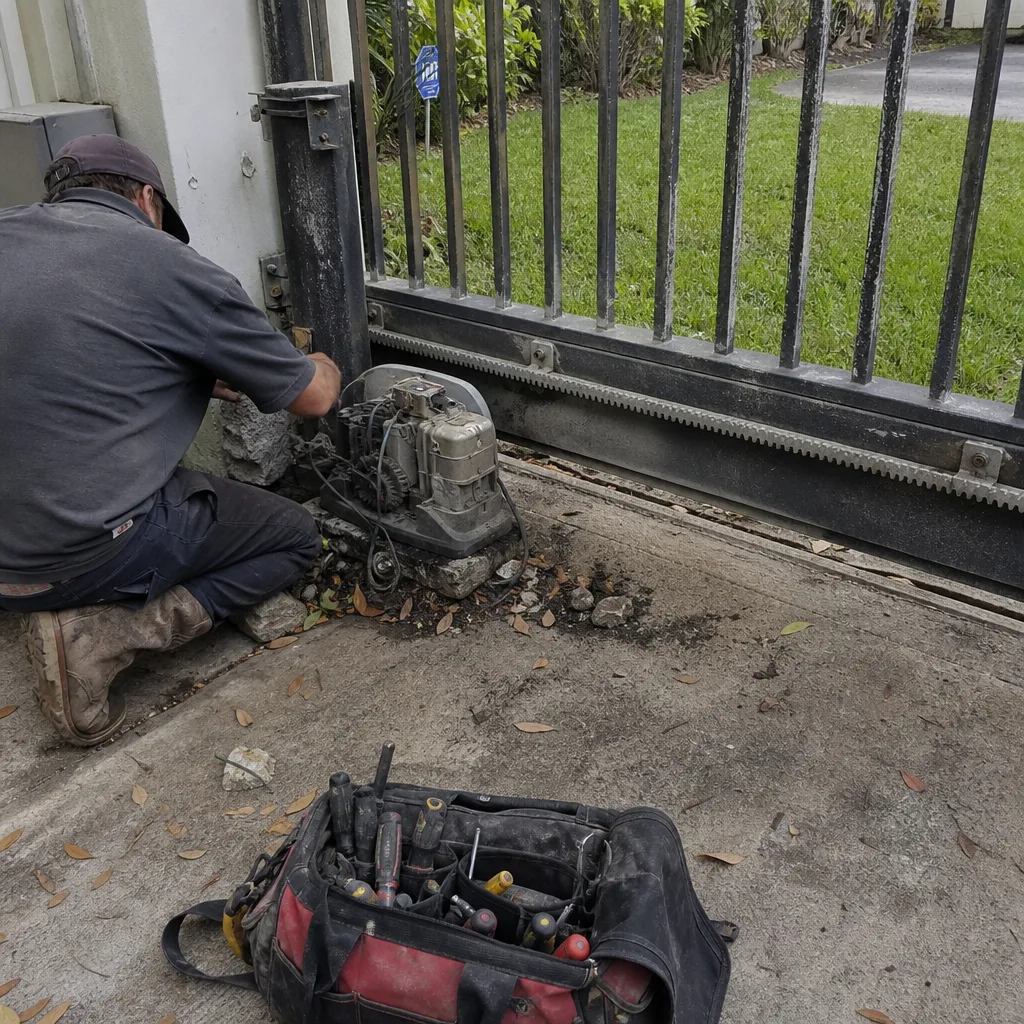 Before
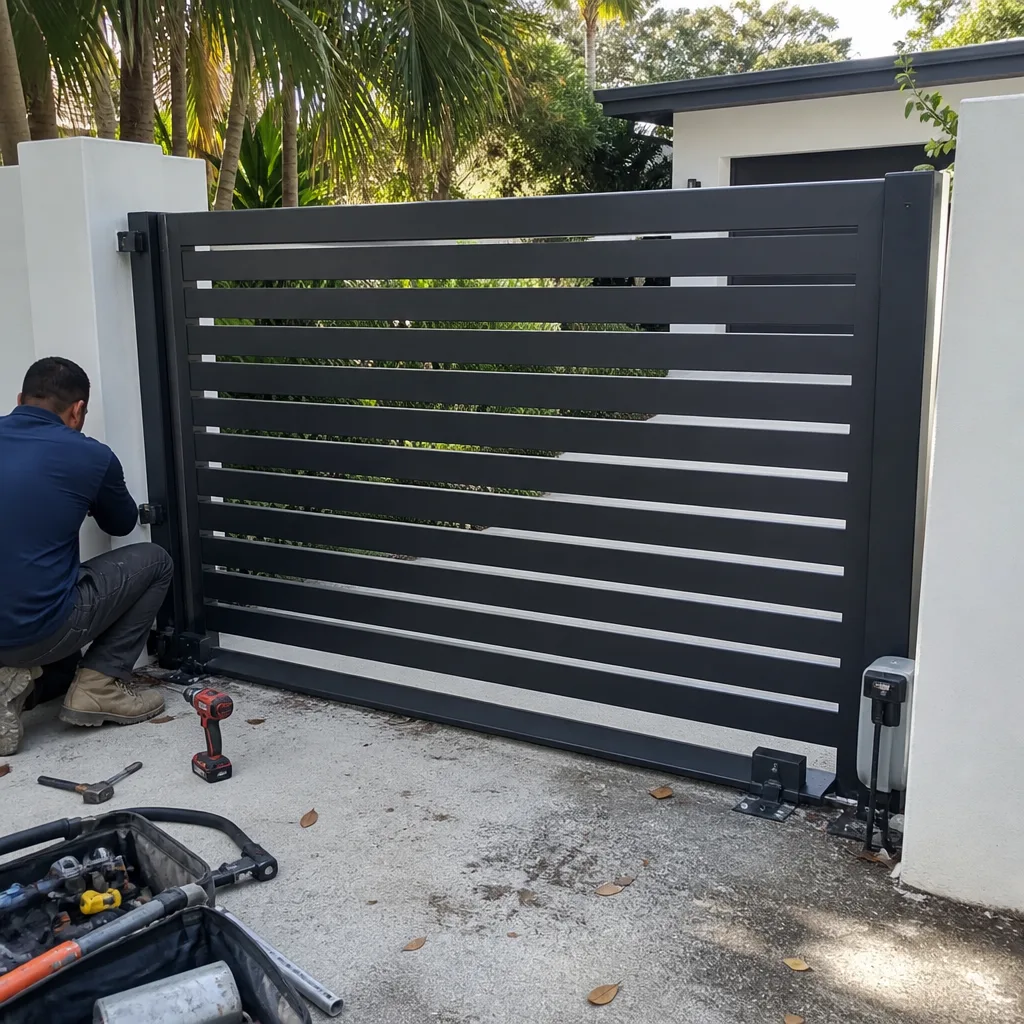 After
After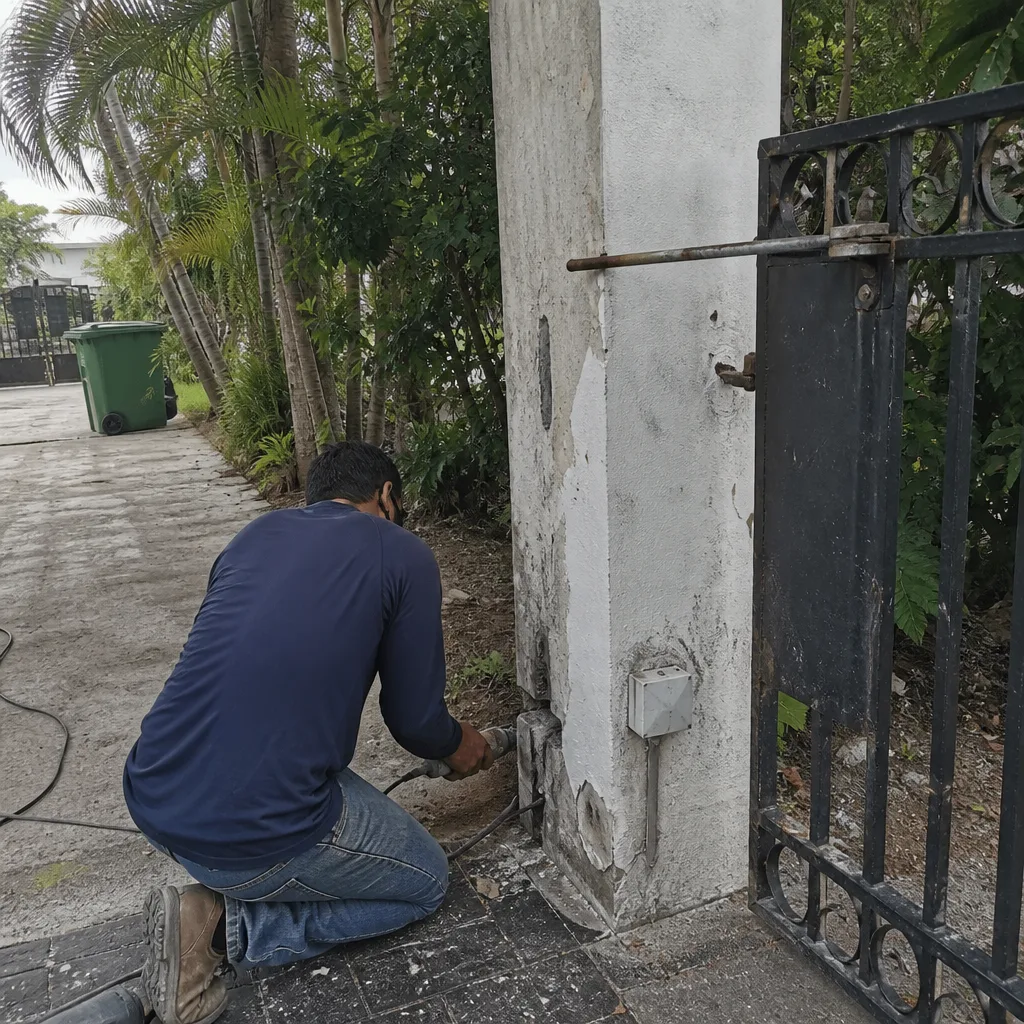 Before
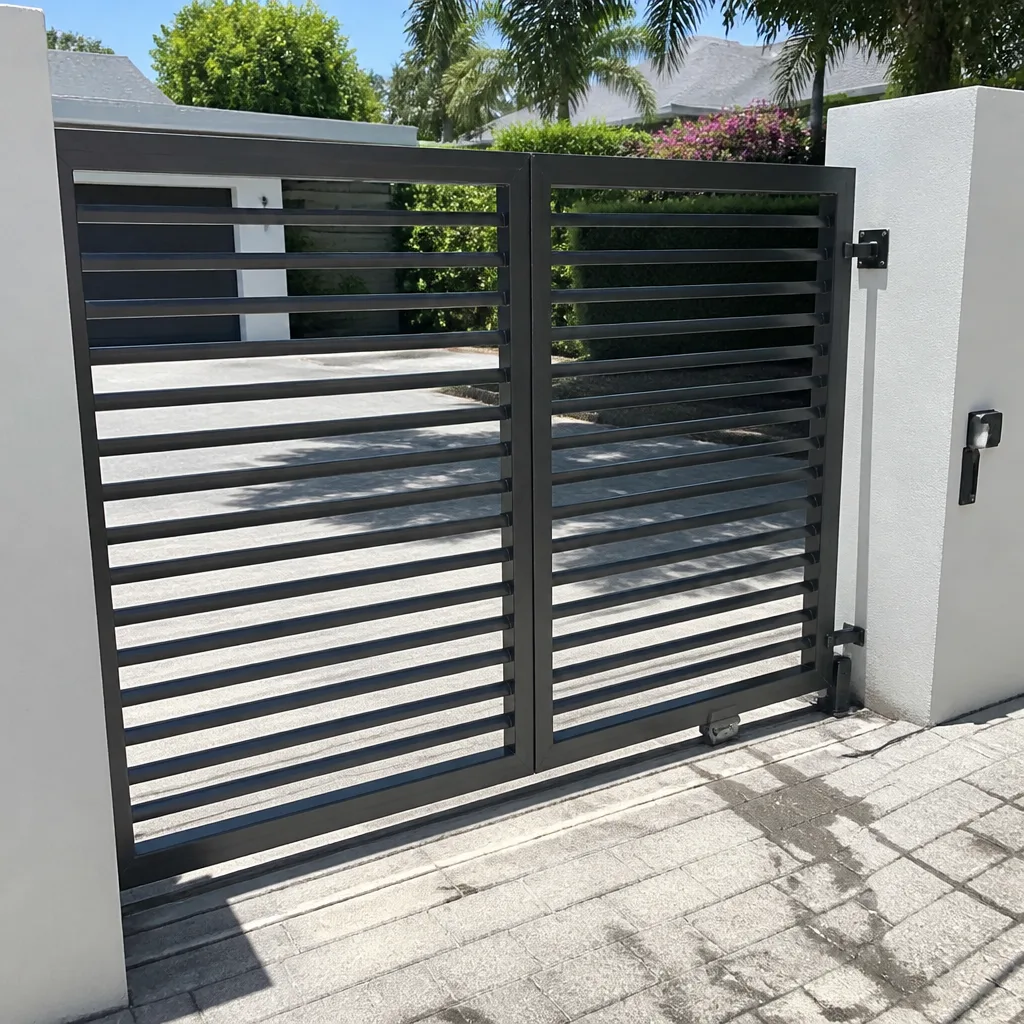 After
After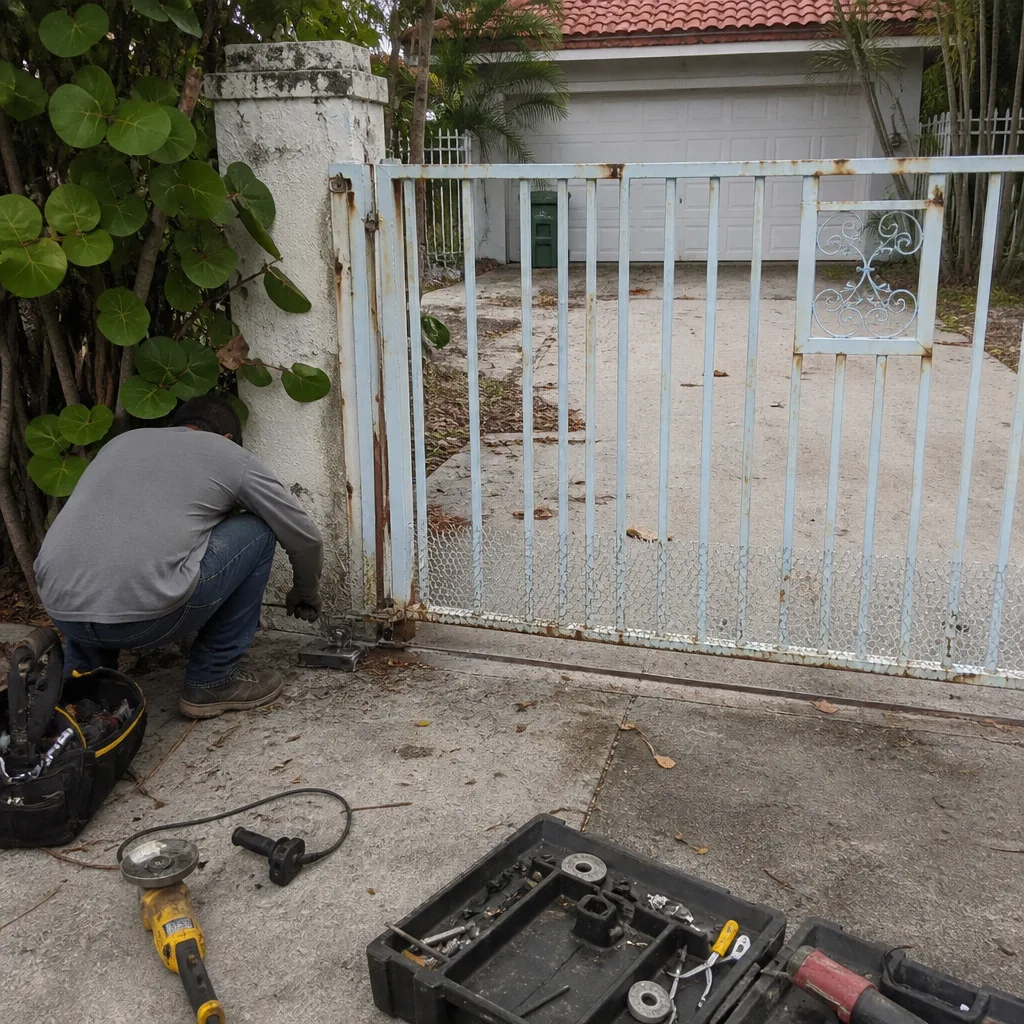 Before
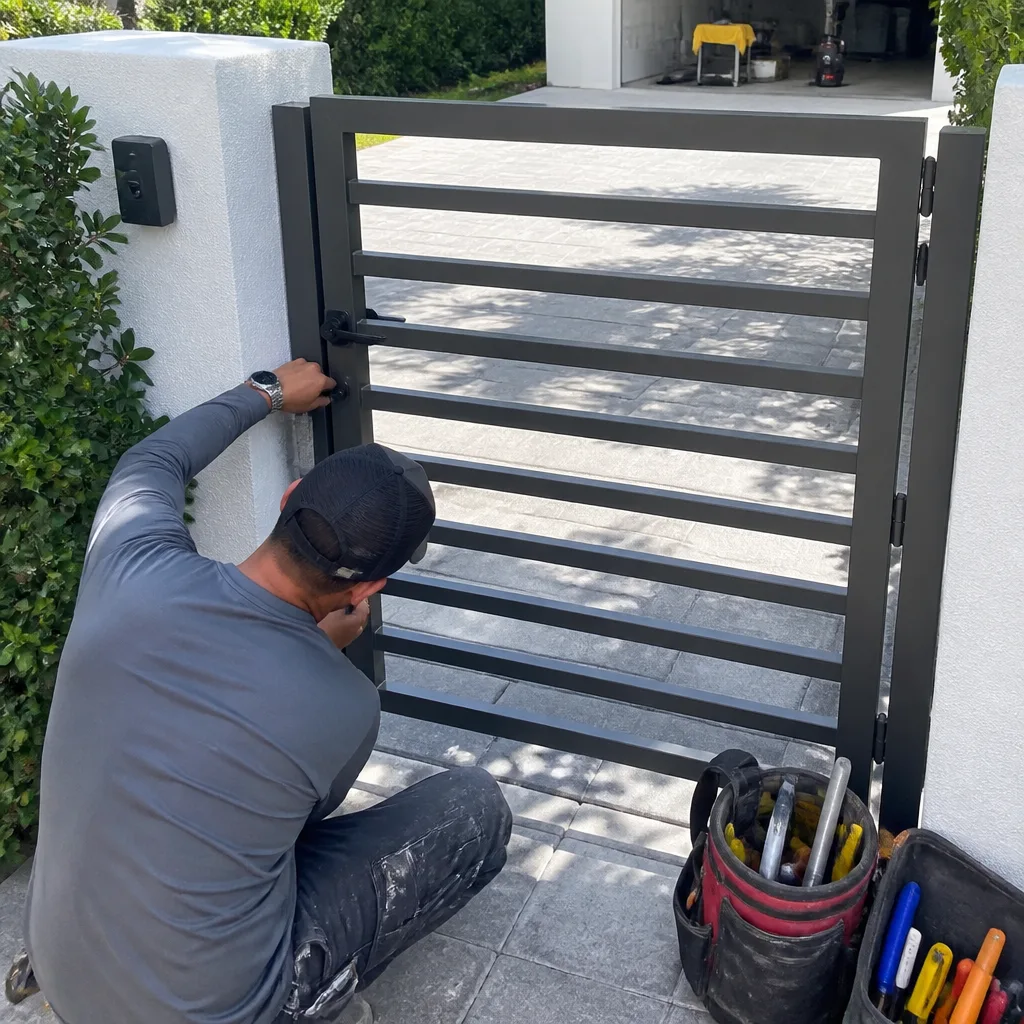 After
AfterGate Repair Maintenance Checklist for Miami Beach Homeowners
Most gate maintenance checklists were written for dry climates. They tell you to lubricate the chain and check the hinges, but they never specify pass-or-fail thresholds. In Miami Beach, a homeowner can complete every generic task and still miss a hinge that’s 60% corroded or a chain that has stretched 8 millimeters past its service limit. Salt air accelerates wear by a factor of three compared to inland Florida, and hurricane season adds debris impact and power-surge damage that inland checklists never address. This guide gives Miami Beach homeowners a measurement-first checklist with specific numeric baselines, so maintenance becomes a recorded history rather than a forgotten ritual. For more guides & resources, visit our blog.
Quick Answer
A proper gate maintenance checklist for Miami Beach properties should include monthly visual inspections, quarterly lubrication and tension checks with recorded measurements, and annual electrical and structural assessments. Key thresholds: chain slack must stay under 12 mm, hinge play under 3 degrees, operator amp draw within 15% of manufacturer spec, and backup battery above 12.4 volts. Record every reading with dated photos so year-over-year comparison reveals degradation trends before failure occurs.
Table of Contents
- Why Measurements Matter More Than Tasks in Miami Beach
- Tools You Need and Where to Get Them
- Monthly Checklist: Visual and Functional Inspections
- Quarterly Checklist: Lubrication, Tension, and Alignment
- Annual Checklist: Electrical, Structural, and Storm Preparation
- How to Photograph Components for Year-over-Year Comparison
- Warranty-Voiding Tasks That Require Professional Logging
- Using a Free Multimeter Reading to Predict Motor Failure
 Before
 After
AfterWhy Measurements Matter More Than Tasks in Miami Beach
We’ve repaired over 22,000 gates since 2014, and the pattern is consistent: gates that fail unexpectedly almost always showed measurable degradation that went unrecorded. For early indicators specific to this area, see Gate Repair Warning Signs: A Miami Beach Homeowner’s Reference Guide. A hinge that wobbles 5 degrees today will wobble 15 degrees in eighteen months and snap the gate arm in a storm. A chain with 10 mm of slack today will jump the sprocket when the next cold front drops humidity and the metal contracts.
Miami Beach’s climate creates unique acceleration patterns. Salt air deposits chloride on every exposed surface within 400 yards of the water. Summer humidity keeps those chlorides active year-round, unlike coastal California where dry nights provide partial relief. Hurricane season, June through November, adds wind-borne sand and debris that abrade seals and pack into roller tracks. Power fluctuations during summer storms fry control boards that were already running at thermal limit.
Generic checklists fail here because they treat maintenance as binary: did you oil the chain, yes or no. A measurement-first approach asks: how much has the chain stretched since last quarter, and is the rate of change increasing? That question requires three data points minimum. This checklist builds the record.
At Vance Gate Repair Miami Beach home, we apply the same documentation standard to residential gates that Adrian Vance developed on commercial access-control sites. Every visit leaves a photographed record of what was found, what was set, and what was installed. Homeowners who maintain their own records get faster, more accurate service when they do call, because the technician sees the trend instead of guessing at history.
Tools You Need and Where to Get Them
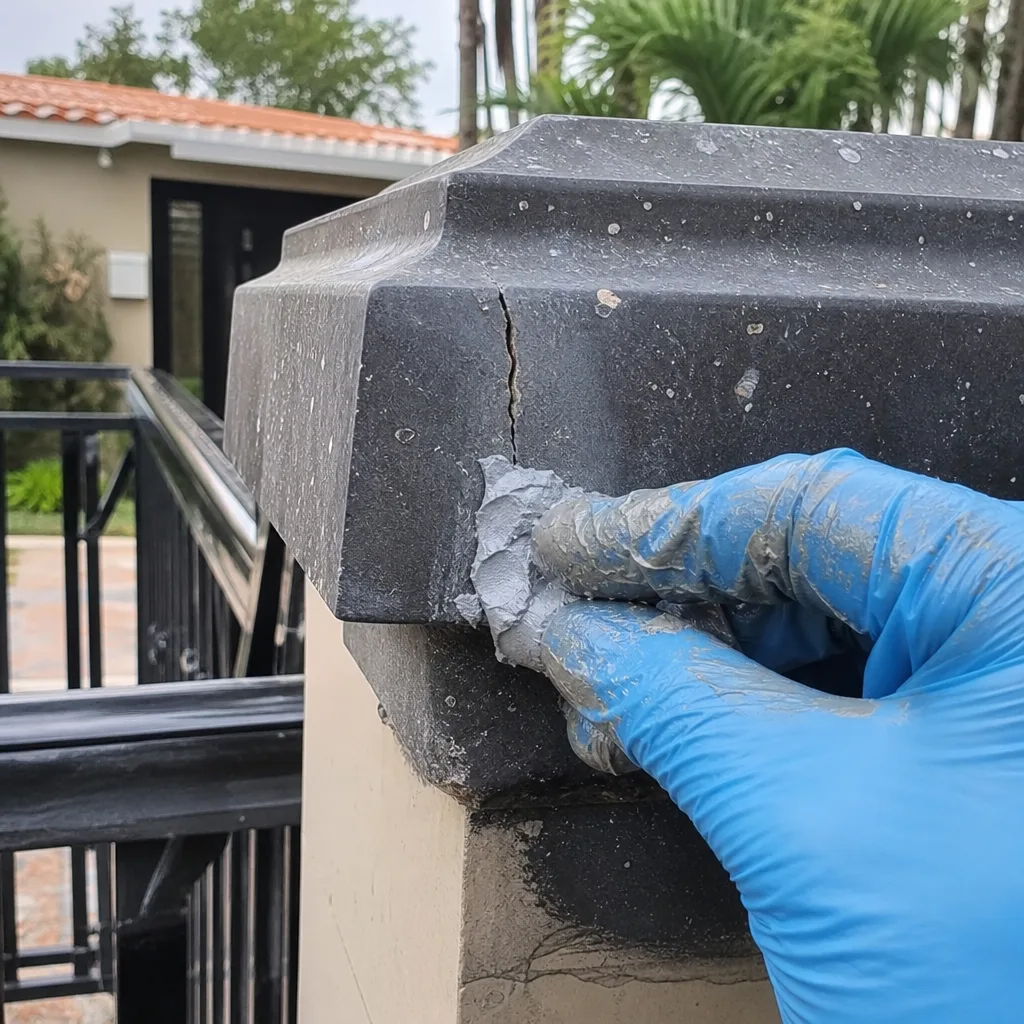
You do not need a technician’s full kit. For the checklist below, buy once and use for years:
- Digital multimeter - $15 to $40 at any Miami Beach hardware store. You need DC voltage, AC voltage, and amp-draw capability. The cheap ones work fine for gate diagnostics.
- 12-inch digital caliper - $20 to $35 online. Measures chain link wear, hinge pin diameter, and roller width to 0.01 mm precision.
- Torque wrench, 1/4-inch drive - $25 to $50. Critical for hinge bolts and operator mounting hardware where over-tightening cracks castings.
- Smartphone with date-stamp enabled - free, already owned. The camera is your most important tool.
- Permanent marker and weatherproof labels - $5. Mark measurement points so you measure the same spot every time.
- White lithium grease and silicone spray - $8 to $12 each. Different substrates need different lubricants; using the wrong one accelerates wear.
Total investment: under $120. One avoided emergency call pays for the kit three times over.
Monthly Checklist: Visual and Functional Inspections
Perform these checks on the first Saturday of each month. Time required: 20 minutes. Record everything in a dedicated notebook or phone notes app with date stamps.
1. Observe a Full Open-Close Cycle
Stand at the gate’s side, not in front. Watch for hesitation, jerking, or speed changes mid-travel. Note the exact point where any anomaly occurs. A gate that slows at the 3 o’clock position on a swing gate, or at 40% extension on a slide gate, has a mechanical binding or a failing limit switch. Write it down.
2. Listen to the Motor
Normal operator sound is a steady hum with consistent pitch. Listen for:
- Grinding - indicates gearbox wear or debris in the chain/slide track
- High-pitched whine - motor working harder than spec, often from binding or voltage drop
- Clicking without movement - relay or capacitor failure in the control board
- Metallic clank at start or stop - loose arm bracket or worn limit-switch cam
3. Inspect All Visible Fasteners
Do not tighten yet; just identify what’s moved. Look for:
- Paint cracks around bolt heads - indicates loosening and micro-movement
- Rust streaks below fasteners - water intrusion, common in Miami Beach after heavy rains
- Missing or damaged lock washers - replace immediately; the fastener is already backing out
4. Check Photo-Eye Alignment
The photo-eye is the infrared beam that stops the gate if something crosses the path. Misalignment is the single most common cause of “gate won’t close” calls in Miami Beach. Look for:
- LED status lights on both sender and receiver - should be solid, not blinking
- Physical displacement - measure the gap between housing and mounting bracket with your caliper; record the mm
- Lens contamination - salt film reduces range by up to 40% in coastal properties
5. Test Manual Release
Every operator has a manual release for power outages. Cycle it once. If it sticks or requires excessive force, the mechanism is corroding. In Miami Beach, we’ve found releases frozen solid after just two skipped monthly checks during humid summer months.
6. Record Battery Voltage (If Equipped)
Gate operators with battery backup - common on Mighty Mule and some Ghost Controls units - need monthly voltage checks. Set your multimeter to DC volts. Touch probes to the battery terminals. Record the reading. A 12-volt battery showing below 12.4 volts is entering failure range. Below 12.0 volts, it will not power the gate through a single cycle during an outage.
Quarterly Checklist: Lubrication, Tension, and Alignment
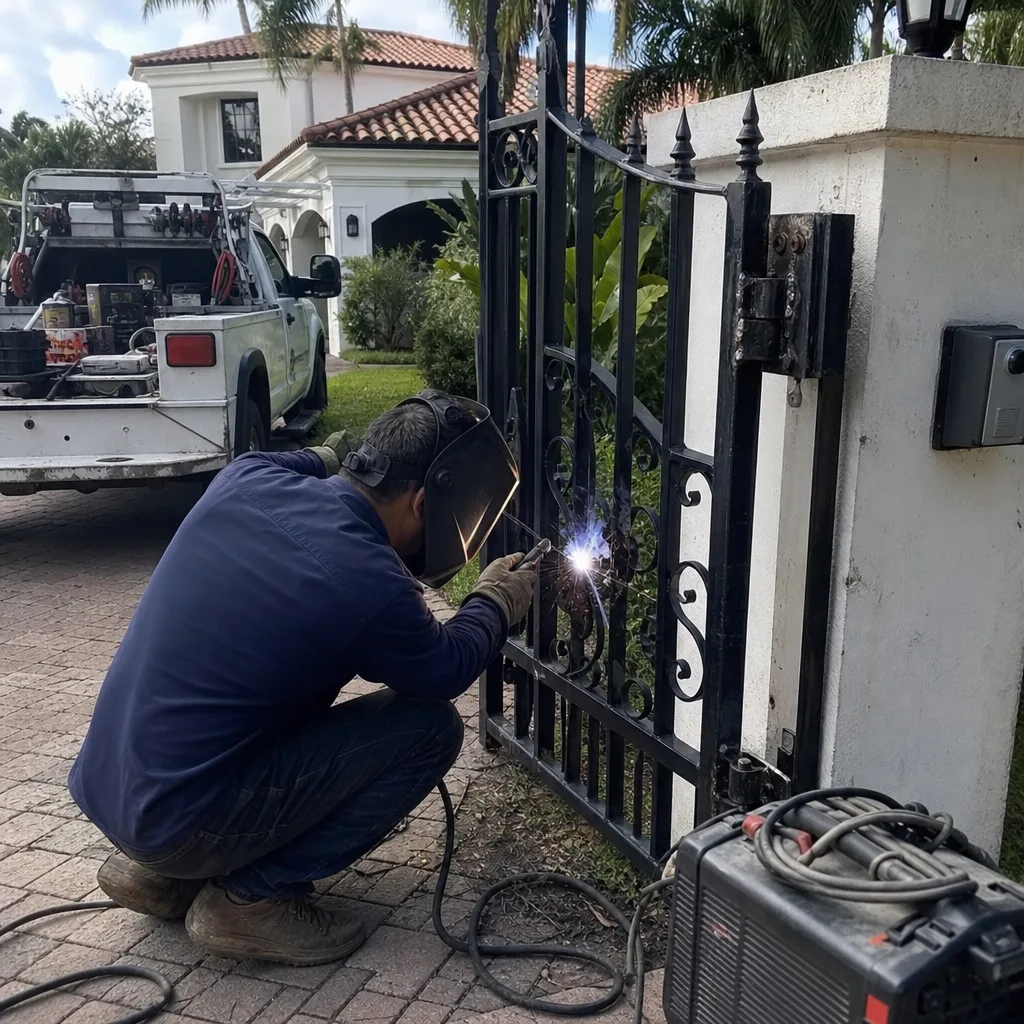
Perform these checks in March, June, September, and December - aligned with Miami Beach’s seasonal transitions. Time required: 45 minutes to 1 hour. This is where measurements become essential.
Step 1: Chain Slack Measurement (Chain-Drive Operators)
- Disconnect power to the operator.
- Find the chain’s midpoint between sprockets.
- Apply 5 pounds of downward pressure (use a fish scale or estimate with a 5-lb weight).
- Measure deflection with your caliper or a ruler.
- Pass/fail: Under 12 mm deflection is acceptable. 12-18 mm requires tension adjustment. Over 18 mm indicates stretched chain requiring replacement.
Record the mm reading every quarter. An increasing trend - 8 mm to 11 mm to 14 mm over three quarters - predicts failure within two quarters even if the current reading is still “acceptable.”
Step 2: Hinge Play Measurement (Swing Gates)
- Open the gate to 90 degrees.
- Grasp the free end and push perpendicular to the gate face.
- Measure the lateral movement at the latch edge with your caliper.
- Convert to angular play: divide the lateral movement in mm by the gate width in mm, then take the inverse tangent. Or simply estimate: 25 mm of movement on a 1200 mm wide gate equals roughly 1.2 degrees.
- Pass/fail: Under 3 degrees is acceptable. 3-5 degrees requires hinge pin replacement or bushing installation. Over 5 degrees risks arm bracket failure or gate leaf damage.
In Miami Beach, salt corrosion accelerates hinge wear. We’ve replaced hinge pins on oceanfront properties that showed 4 degrees of play after just 18 months - inland, the same hardware lasts 5 years.
Step 3: Slide Gate Roller and Track Inspection
- Clean the track with a wire brush and compressed air.
- Measure roller diameter with calipers. Compare to manufacturer spec (usually stamped on the roller housing).
- Pass/fail: Replace rollers when diameter wears below 95% of spec. A 3-inch roller at 2.75 inches is at limit.
- Check track level with a 4-foot level. Maximum allowable variance: 1/8 inch over 4 feet. Miami Beach’s sandy substrate shifts more than limestone bedrock; re-leveling is common every 2-3 years.
Step 4: Lubrication with Correct Products
- Chain: White lithium grease, applied sparingly. Wipe excess; accumulated grease traps sand and salt.
- Hinge pins: Same. Do not use penetrating oil like WD-40 as primary lubricant; it evaporates and leaves metal unprotected.
- Slide track: Dry silicone spray only. Wet lubricants attract grit that accelerates roller wear.
- Lock mechanisms: Graphite powder. Oil-based products gum up in Miami Beach humidity.
Step 5: Control Board Connection Torque
Power off, open the operator housing. Check terminal screw tightness with your torque wrench set to manufacturer spec (usually 7-10 in-lb for low-voltage terminals, 15-20 in-lb for power terminals). Do not over-torque; cracked terminal blocks are expensive failures. Look for green corrosion on wire ends - cut back, strip, and re-terminate if found. This is especially critical after Miami Beach’s summer storm season, when power surges and humidity both peak.
Annual Checklist: Electrical, Structural, and Storm Preparation
Schedule this for May, before hurricane season intensifies. Time required: 2-3 hours, or schedule a professional visit for the electrical portion. At Gate Repair in Miami Beach, we perform annual assessments that include all items below plus amp-draw analysis.
Electrical System
- Operator amp draw: Clamp your multimeter around the power lead (hot wire only) and cycle the gate. Record peak amps during start, run, and stall (momentary obstruction). Compare to the nameplate rating. Exceeding 115% of rated amps indicates motor degradation or mechanical binding. This is the single best predictor of motor failure 2-3 months in advance.
- Ground integrity: With power off, check continuity between operator chassis and a known ground (outlet ground pin or ground rod). Resistance should be under 1 ohm. Higher resistance indicates corroded ground connection - a shock hazard and surge-vulnerability point.
- Conduit and junction boxes: Look for water intrusion, cracked seals, or UV degradation on above-ground conduit. Miami Beach’s UV index is extreme; PVC conduit becomes brittle in 3-5 years without UV-rated paint or insulation.
Structural System
- Post integrity: Excavate 2 inches around each gate post. Check for concrete degradation, soil erosion, or wood rot (for wood posts). A post that moves 1/4 inch when pushed will eventually stress the operator mounting plate.
- Gate leaf squareness: Measure diagonals. A difference over 1/2 inch on a standard residential gate indicates frame racking from hinge wear or impact damage. Rack worsens binding and operator strain.
- Welded joints: Wire-brush to bare metal, inspect for cracks. Salt air attacks weld heat-affected zones preferentially. Small cracks propagate fast under cyclic loading.
Storm Preparation
- Manual release function: Confirm smooth operation; lubricate if needed. During a hurricane, you may need to secure the gate open or closed manually.
- Backup battery load test: Disconnect AC power, cycle gate 5 times on battery. If it fails before cycle 3, replace. Record voltage before and after test.
- Debris clearance: Trim vegetation to 18 inches from gate path. Remove loose objects within gate swing radius. Document with photos for insurance.
How to Photograph Components for Year-over-Year Comparison
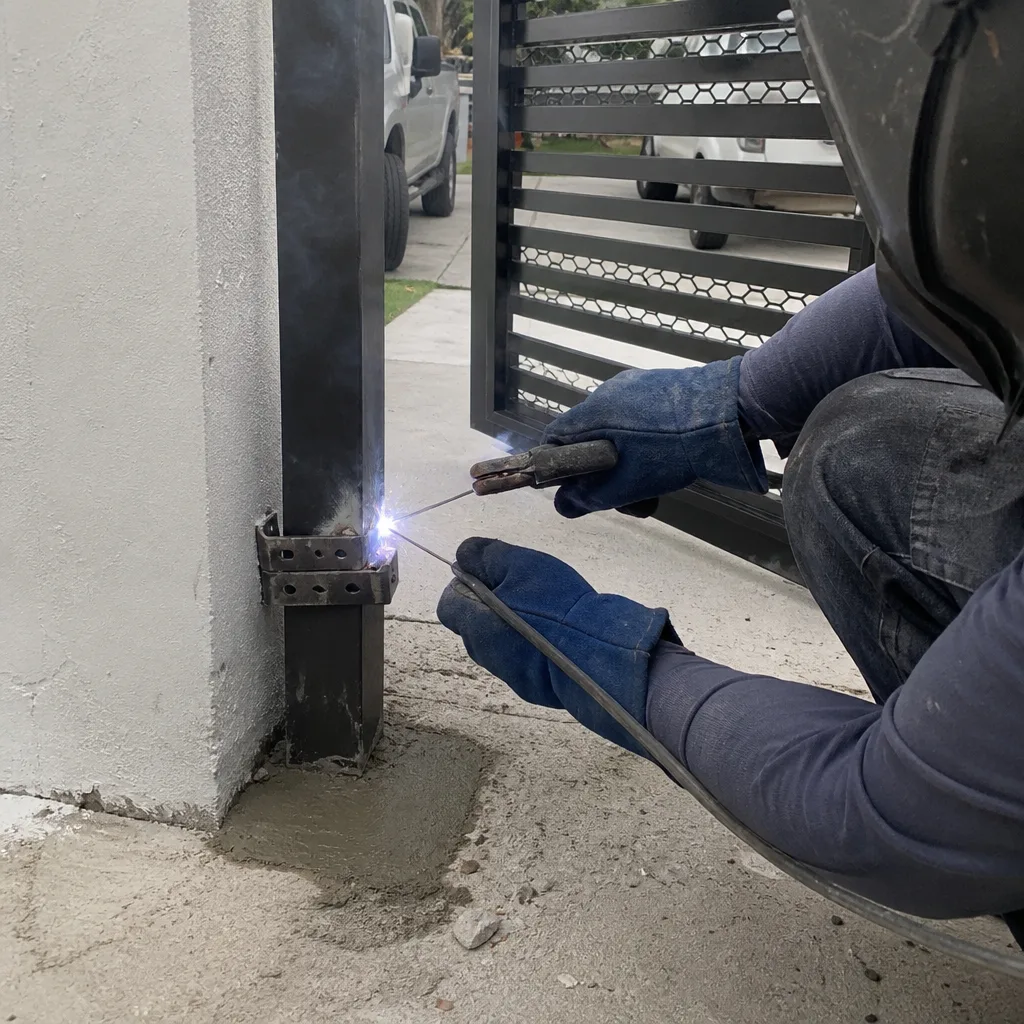
A photo without a reference point is useless for comparison. Our documentation standard, developed from commercial access-control work, applies equally to homeowner records.
- Mark a fixed reference point on each component with your permanent marker - “A” on the chain housing, “B” on the hinge bracket. Photograph the mark in context.
- Include a ruler or coin in every close-up for scale. A corroded hinge pin looks dramatic at 2x magnification; with a quarter in frame, you see it’s actually 1.2 mm of material loss.
- Shoot the same angle every time. Take a “master photo” of each shot position and store it. Replicate that angle quarterly.
- Photograph the multimeter reading with the probe points visible, not just the number. This proves where you measured.
- Name files systematically: GateLocation_Component_YYYYMMDD.jpg. Example: Driveway_ChainSlack_20250315.jpg.
- Store in cloud with date sort. Google Photos, iCloud, Dropbox - any service that lets you scroll chronologically and see degradation progression.
Under The Haven Standard Clause 4, our technicians leave every residential job with a photo log of adjustments and installed part numbers. Homeowners who maintain their own parallel records get faster diagnosis and more precise quotes when they call for service.
Warranty-Voiding Tasks That Require Professional Logging
Operator manufacturers - including Ghost Controls, DoorKing, and Elite - void warranties for specific owner-performed work. The tasks are not prohibited; they require documentation by a qualified technician to preserve coverage.
| Task | Warranty Risk | Required Documentation |
|---|---|---|
| Control board firmware update | Full void if failed update bricks board | Technician serial number, update version, before/after photo of board display |
| Limit switch recalibration | Partial void on motor if overtravel causes mechanical damage | Written record of limit positions in degrees or inches, photo of cam position |
| Battery replacement in backup system | Void if non-OEM battery causes charging circuit damage | Part number photo, installation date, technician signature |
| Safety edge sensitivity adjustment | Full void if adjusted below code-compliant threshold and injury occurs | Force measurement in pounds, UL 325 compliance statement |
| Motor replacement | Full void if non-factory motor installed | Factory-authorized technician invoice with part serial number |
At Vance Gate Repair Miami Beach, we log every warranty-relevant task with the documentation required by all nine brands we service. Learn more about our Gate Repair services. If you perform these tasks yourself, photograph everything and retain purchase receipts. Better: call for a documented service visit that protects your warranty and creates a transferable record for future home sale.
Using a Free Multimeter Reading to Predict Motor Failure
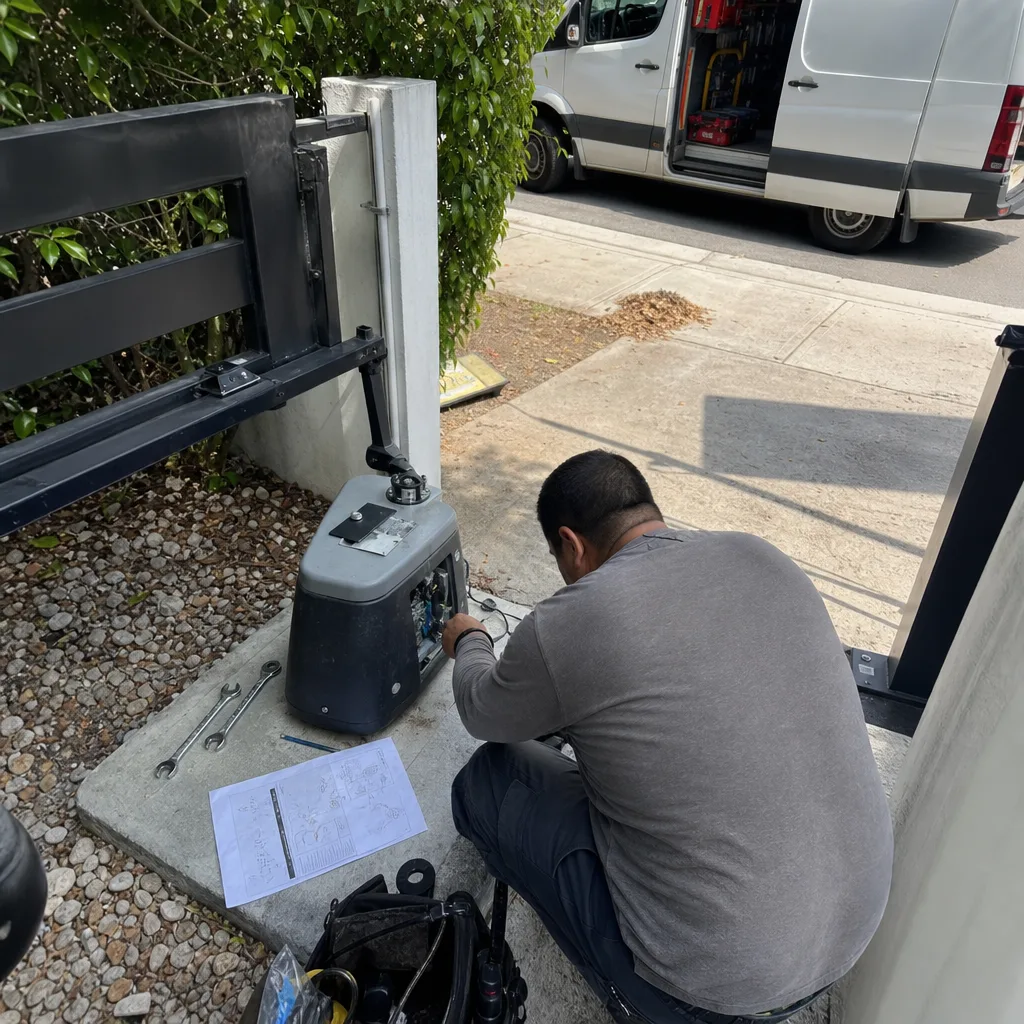
This is the most valuable single measurement in this guide. It requires no disassembly and takes 90 seconds.
Every gate motor has a nameplate amp rating - for example, “3.5A” on a Gate Motor & Opener in Miami Beach installation. This is the steady-state running current at nominal voltage and rated load. In practice, motors draw more at startup (inrush current, 2-3x running) and spike briefly when encountering resistance.
The Measurement Protocol
- Set multimeter to AC amps (clamp meter) or use inline measurement.
- Clamp around the hot wire entering the operator housing.
- Have an assistant cycle the gate while you watch the display.
- Record: inrush peak, running steady-state, and stall spike (briefly obstruct the gate with your hand - carefully - to simulate binding).
Interpretation
- Steady-state within 10% of nameplate: Normal. Record and compare next quarter.
- Steady-state 10-15% above nameplate: Early degradation. Likely causes: bearing wear, slight voltage drop, or increasing mechanical resistance. Schedule professional assessment within 60 days.
- Steady-state over 115% of nameplate: Failure imminent within 2-3 months. The motor is working beyond thermal design limits. Insulation degrades exponentially with temperature. We’ve replaced motors that showed 130% amp draw for six weeks - they failed catastrophically, often taking the control board with them.
- Inrush current declining over time: Counterintuitively bad. Strong inrush indicates healthy winding capacitance. Fading inrush means winding degradation. Compare quarterly readings.
This measurement costs nothing and predicts failure before symptoms appear. A gate that “works fine” but draws 4.2 amps on a 3.5A nameplate is a gate that will fail during the next Miami Beach heat wave, when thermal stress peaks.
Common Mistakes to Avoid
- Using the same lubricant everywhere. White lithium grease on a slide track turns into sandpaper within a month in Miami Beach’s gritty coastal air. Silicone spray on a chain evaporates and leaves metal unprotected.
- Skipping monthly checks during “good weather.” January through April in Miami Beach feels gentle, but salt air doesn’t stop. Deferred maintenance accumulates invisible damage that manifests in June’s first humidity spike.
- Tightening without torque specs. We’ve replaced operator housings cracked by homeowners with standard wrenches. Cast aluminum fails at surprisingly low torque. A $25 torque wrench prevents $400 replacements.
- Ignoring the backup battery until it fails. Battery voltage below 12.4 volts means the battery is already in degraded capacity. Waiting for “it doesn’t work” means waiting for a power outage when you need it most.
- Photographing without scale or reference. A photo of “rust on hinge” from 2024 cannot be compared to 2025 without a ruler and fixed angle. The photography system matters as much as the measurement system.
- Performing warranty-voiding work without logging. A firmware update gone wrong, or a limit switch set too far, voids coverage that would have paid for professional repair. When in doubt, pay for a documented service visit.
- Assuming “no noise” means “no problem.” Electric motors fail silently until they don’t. The amp-draw trend reveals degradation long before audible symptoms appear.
When to Call a Professional
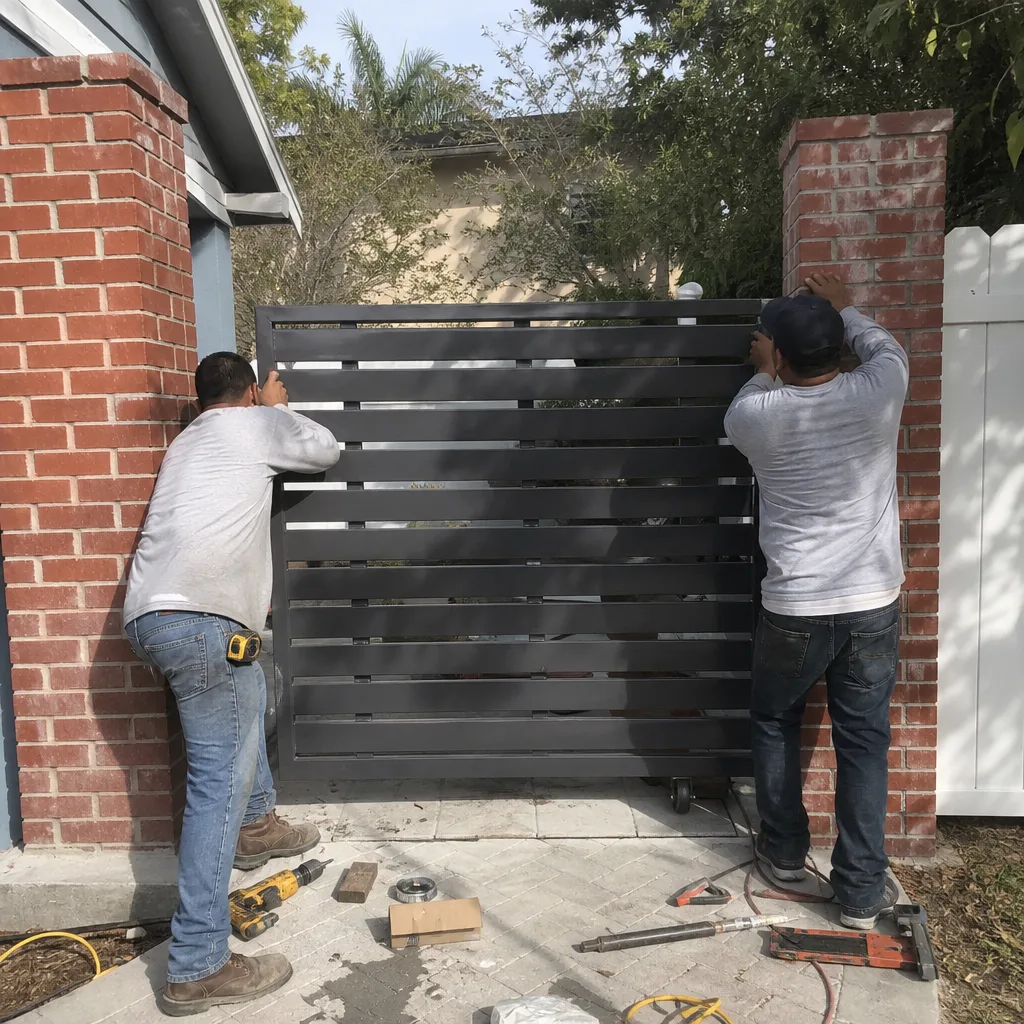
Call a technician when measurements trend toward failure thresholds, when electrical work exceeds your comfort level, or when warranty documentation is required. Specific triggers: amp draw exceeding 115% of nameplate, hinge play over 3 degrees with increasing quarterly trend, any crack in welded joints or concrete footings, and any control board work on a unit still under manufacturer warranty.
Vance Gate Repair Miami Beach offers free estimates in Miami Beach. We’ll review your maintenance records, perform our own measurements, and give you a written price before any work starts under Haven Standard Clause 1. If you have a written estimate from another company, we’ll provide a free second opinion. Every visit includes a documented photo record under Clause 4. Call (786) 371-2767.
Frequently Asked Questions
Monthly visual and functional checks, quarterly lubrication and measurement, and annual electrical and structural assessment. Miami Beach’s salt air and humidity accelerate wear compared to inland climates, so the quarterly schedule is minimum, not ideal.
Most residential gate maintenance visits in Miami Beach run between $180 and $340, depending on gate type, operator brand, and whether adjustments or parts replacement are needed. A written price is provided before work starts. Call (786) 371-2767 for an exact quote - estimates are free.
Homeowners can safely perform monthly visual checks, quarterly lubrication, and basic measurements with the tools listed in this guide. Electrical work, limit switch calibration, and any task that affects warranty coverage should be logged by a qualified technician. Safety edges and photo-eye alignment also require verification against UL 325 force standards that most homeowners cannot measure accurately.
With documented maintenance, 10-15 years for quality brands like DoorKing and Elite. Without maintenance, 5-7 years is typical in coastal Miami Beach due to salt corrosion and thermal stress. The amp-draw measurement protocol in this guide predicts failure 2-3 months before it occurs, allowing planned replacement rather than emergency service.
Test manual release function, verify backup battery load capacity, clear vegetation and debris from the gate path, and confirm the gate can be secured in open or closed position without power. Photograph the gate condition for insurance documentation. Schedule professional assessment in May for any operator showing elevated amp draw or mechanical wear.
We service nine major automation brands: LiftMaster, FAAC, BFT, Linear, Viking, Ghost Controls, DoorKing, Elite, and Mighty Mule. We repair what you have rather than steering you toward replacement. For Gate Installation in Miami Beach, we recommend based on your specific gate geometry and usage pattern, not brand commission.
The Bottom Line
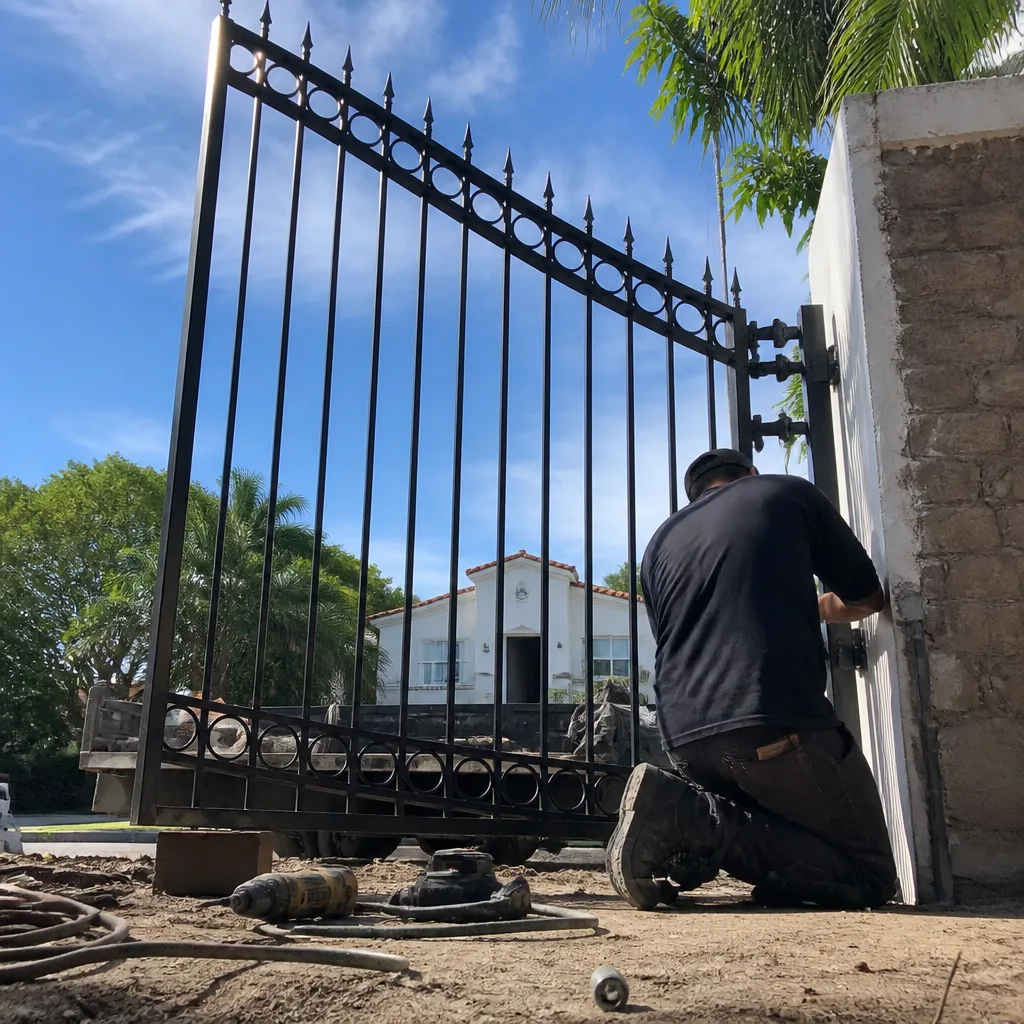
A maintenance checklist without measurements is a ritual without memory. In Miami Beach’s corrosive coastal climate, gates degrade measurably and predictably. Chain stretch, hinge play, amp draw, and battery voltage all trend toward failure thresholds that are knowable in advance. Record the numbers, photograph the evidence, and compare quarter to quarter. The homeowner who knows their gate’s baseline gets years more service life, avoids emergency calls, and enters every service interaction with the documentation that speeds accurate repair. The tools cost under $120. The habit costs 20 minutes a month. The return is a gate that fails on your schedule, not in a thunderstorm at 11 PM.
Written by Adrian Vance, Owner at Vance Gate Repair Miami Beach, serving Miami Beach since 2014.