
Last updated September 21, 2026
Free on-site gate assessment - hinges, posts, and your LiftMaster or Nice gate operator checked before anything is quoted
The assessment is free and the quote is the invoice.

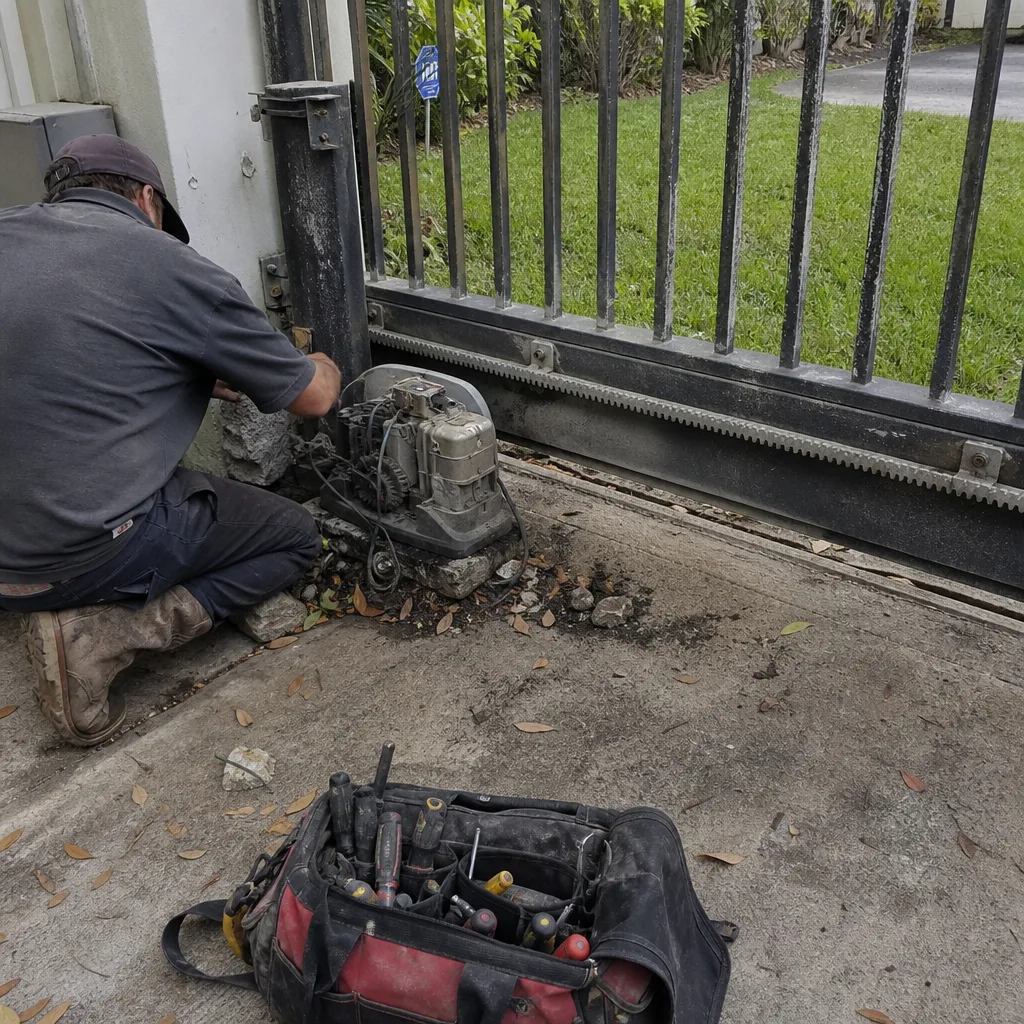 Before
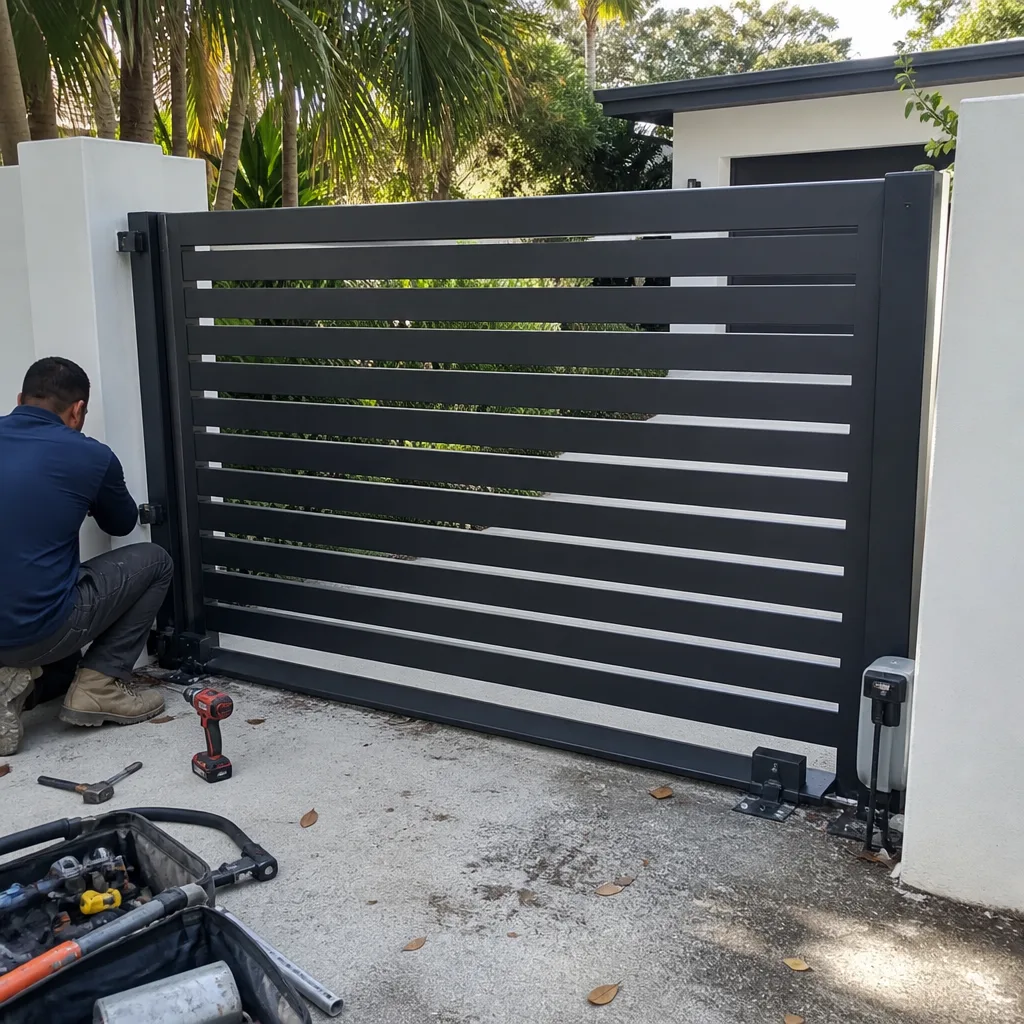 After
After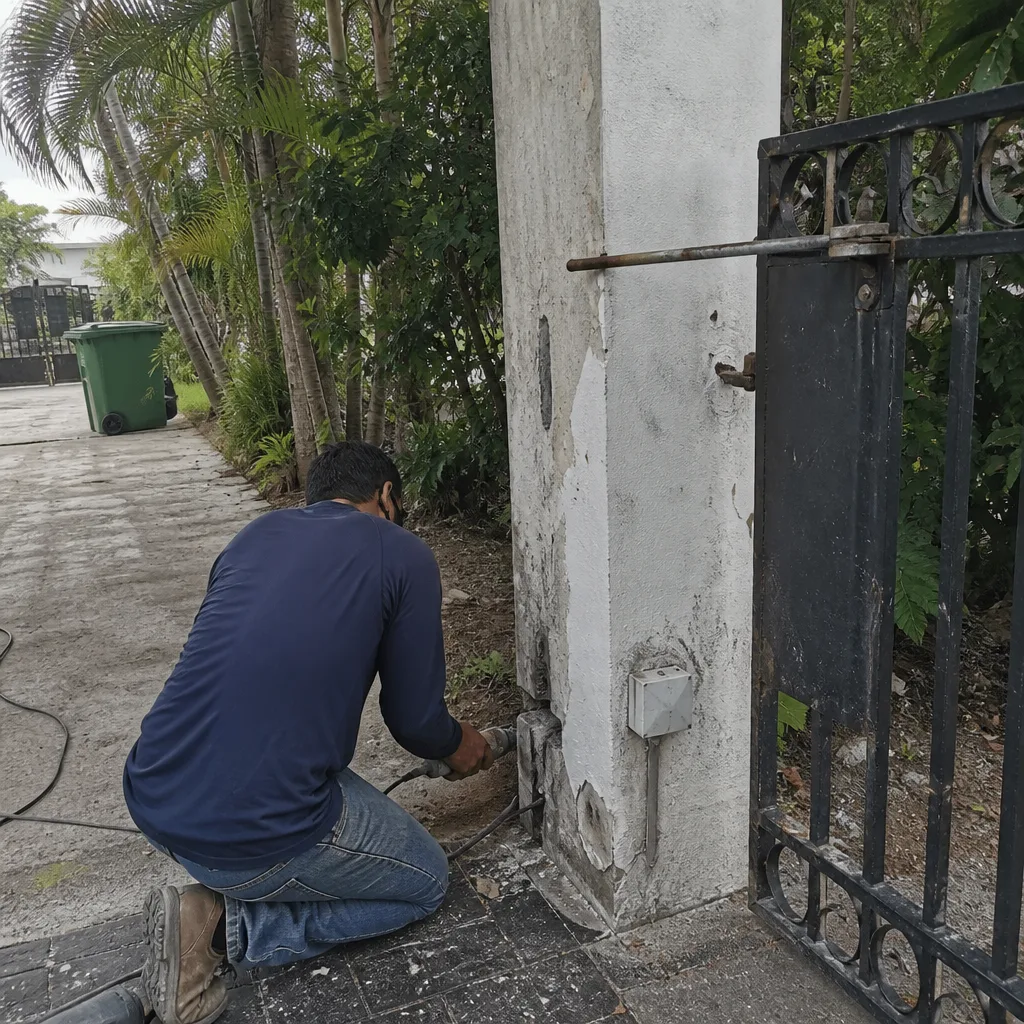 Before
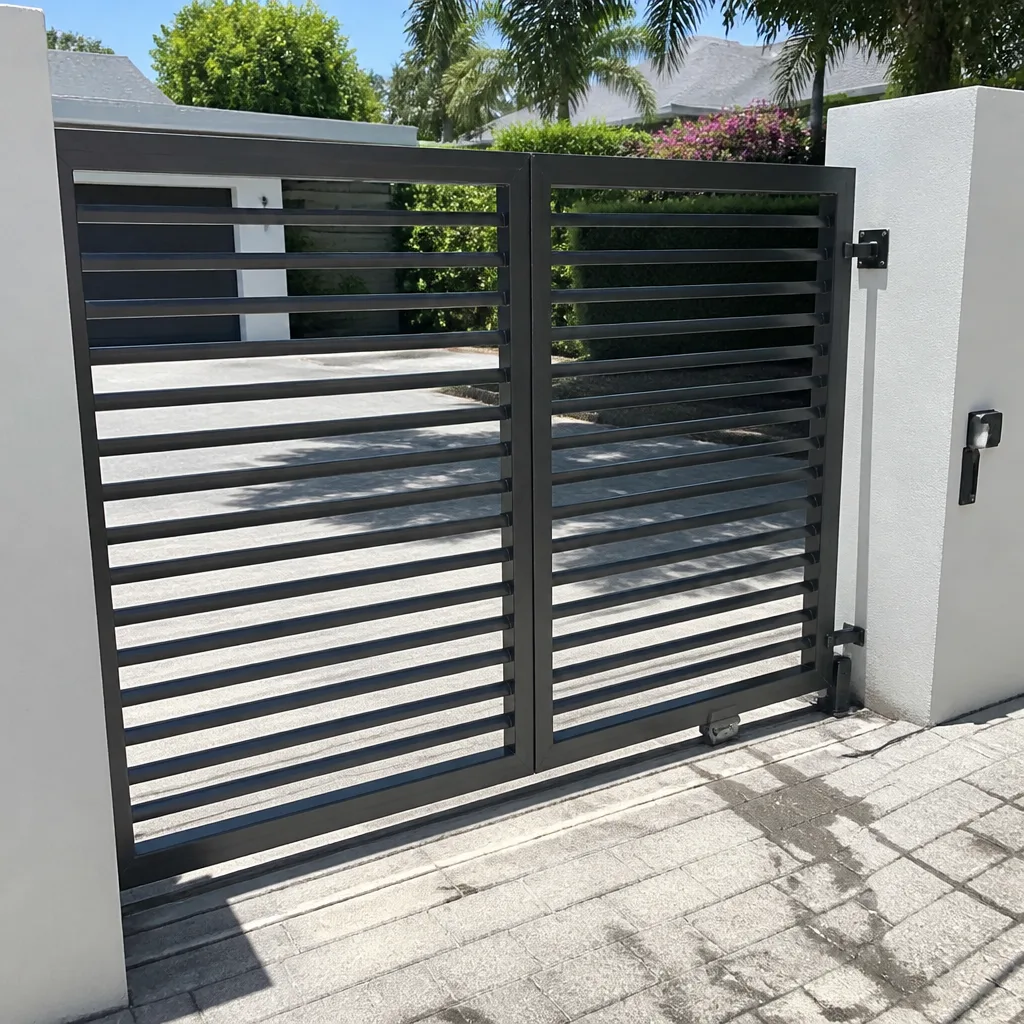 After
After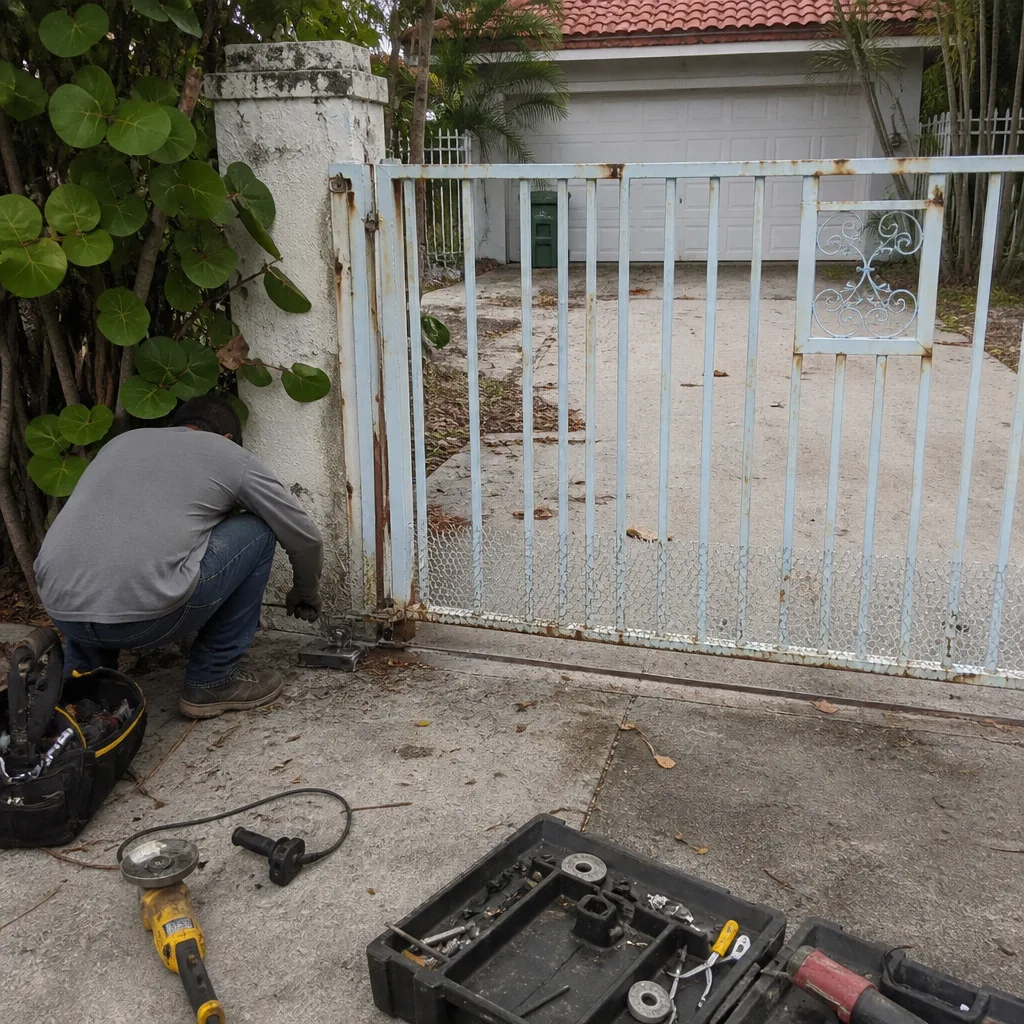 Before
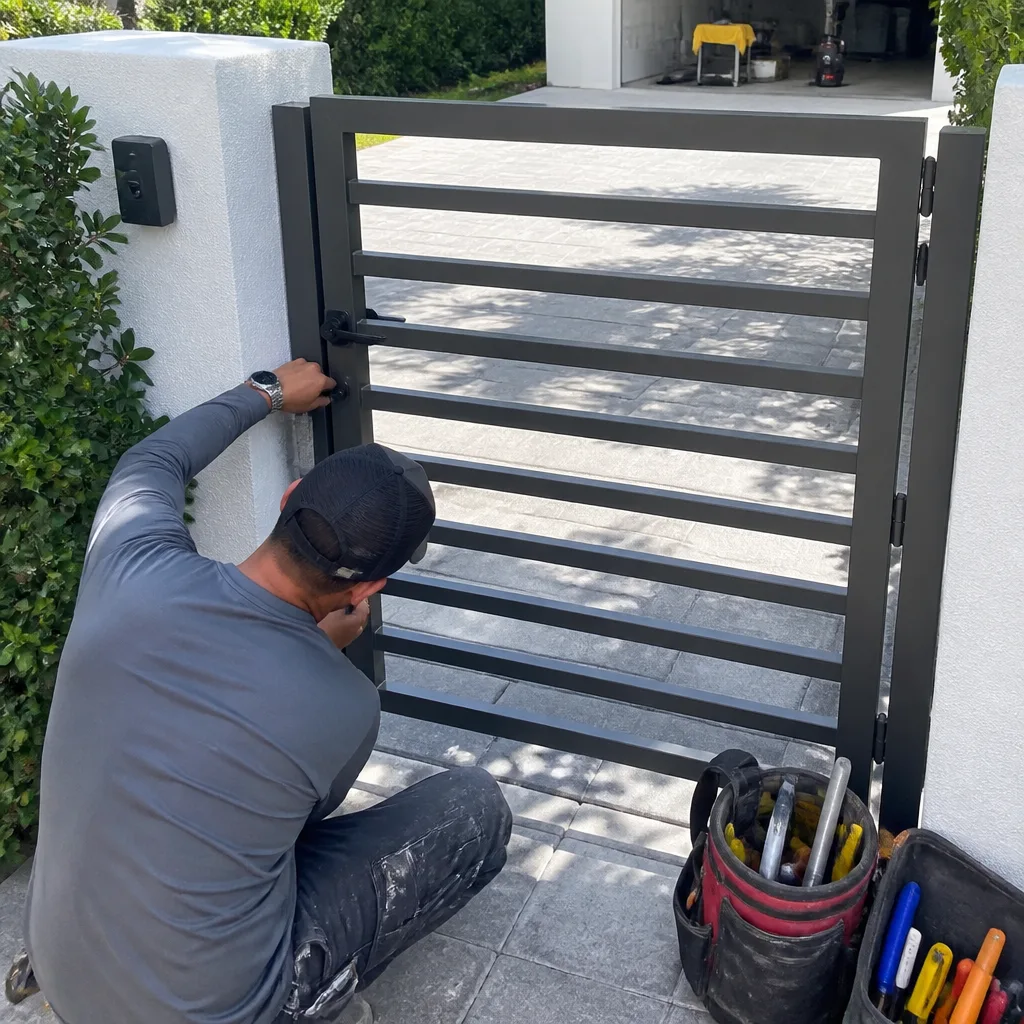 After
AfterGate Repair Permits, Codes & Inspections in FL: What You Need to Know
A gate motor swap is almost never a permitted scope in Florida, but replacing a gate post set in concrete typically is. The homeowner, not the contractor, bears liability if that distinction is ignored, and an unpermitted structural repair can surface as a title encumbrance at closing. In Miami Beach, where property transactions move fast and building records are digitized back to the 1970s, we’ve seen deals delayed over a $3,200 gate post replacement that should have taken a permit but didn’t. This guide gives you the exact code thresholds so you know when to ask for a permit and when a contractor who insists on one is padding the bill, and complements our Gate Repair Warning Signs: A Miami Beach Homeowner’s Reference Guide.
Quick Answer
Most gate repairs in Florida do not require a permit if the work stays within “maintenance and repair” scope under Florida Building Code Section 105.1. A permit is required when the repair involves structural elements like concrete footings, masonry pillars, or load-bearing posts, or when new electrical service is run to an automated gate operator. Miami-Dade County adds stricter requirements for automated gates in wind-borne debris regions, which includes all of Miami Beach.
Table of Contents
- When Are Permits Required for Gate Repair in Florida?
- Florida Building Code: The Structural vs. Maintenance Line
- Miami-Dade County’s Stricter Overlay Rules
- What “Like-for-Like Replacement” Actually Means
- How to Look Up Permits on the Miami Beach Building Portal
- The Inspection Sequence: What Inspectors Actually Check
- Permit Costs, Timeline, and When They’re Worth It
- Common Mistakes to Avoid
- When to Call a Professional
- Frequently Asked Questions
 Before
 After
AfterWhen Are Permits Required for Gate Repair in Florida?
Florida Building Code Section 105.1 establishes the baseline: work that is “ordinary repairs and maintenance” does not require a permit. The code defines this as work that does not affect structural integrity, electrical systems, or life safety features. For gates, this creates three clear categories.
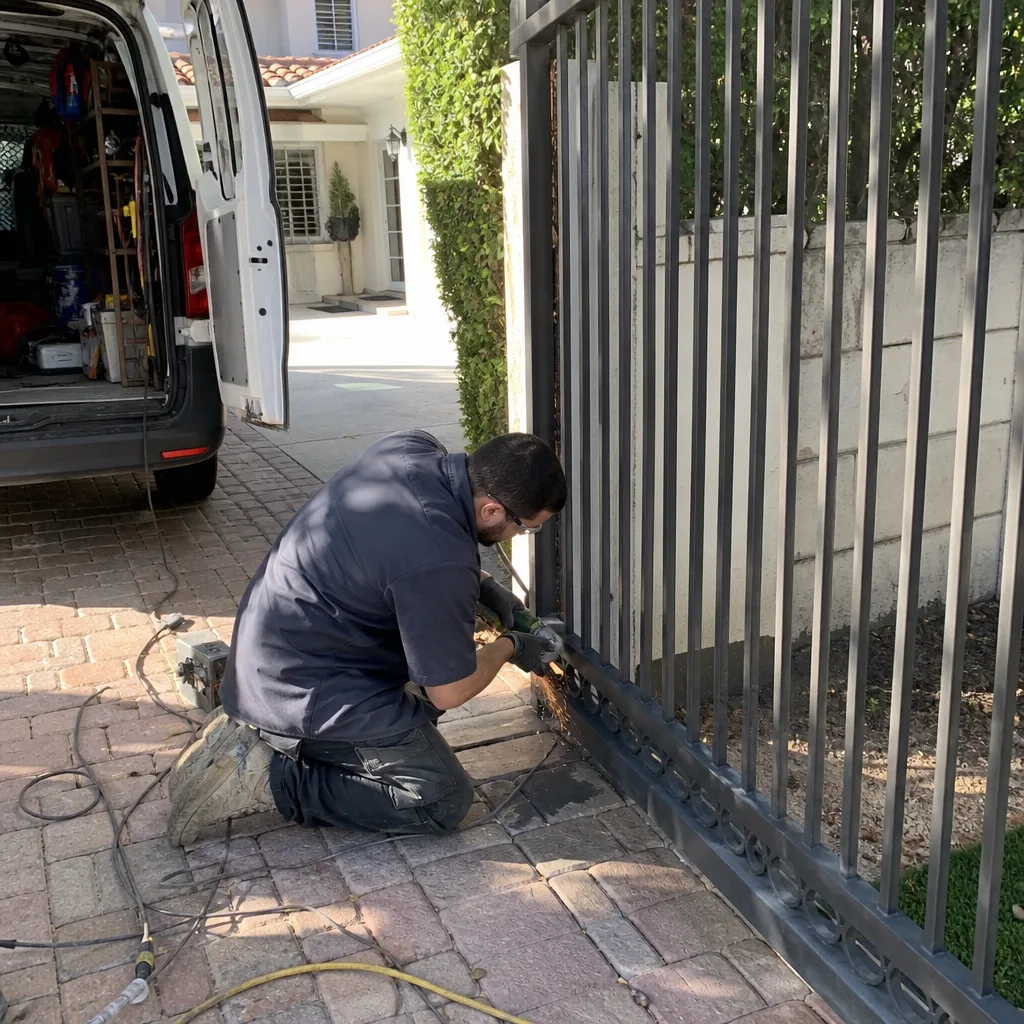
No permit required: Motor replacement on an existing operator, limit switch adjustment, photo-eye realignment, hinge lubrication or replacement, track cleaning, control board programming, remote programming, and welding of non-structural decorative elements. We’ve performed thousands of these repairs across Miami Beach since 2014, from FAAC 740 operators in South Beach condos to Viking G-5 swing arms in Sunset Harbour single-family homes, and none required permitting.
Permit required: Replacement of a gate post set in concrete, new concrete footing or pier, masonry pillar reconstruction, new electrical circuit run from the main panel to the gate location, installation of a new automated gate where none existed, and any modification to the gate that changes its wind-load rating or opening width.
Gray area that demands clarification: Replacing a gate leaf but reusing the existing hinges and posts; replacing an operator and adding a new safety edge that wasn’t previously present; modifying the gate frame to accommodate a different motor brand. In these cases, the specific facts determine permit status, and a contractor who won’t commit in writing is a red flag.
The liability structure matters here. Under Florida Statute 553.79, the property owner is responsible for ensuring permitted work is properly permitted. A contractor who performs structural work without a permit can face disciplinary action, but the title defect attaches to the property. In Miami Beach’s active real estate market, that defect shows up on a title search and can require retroactive permitting, fines, or a hold-harmless agreement to resolve.
Florida Building Code: The Structural vs. Maintenance Line
The Florida Building Code, 8th Edition (2023), draws the structural versus maintenance line at the point where work affects “the structural integrity of the assembly or the electrical supply to the operator.” This sounds clear until you apply it to actual gate components.
Structural elements that trigger permitting:
- Gate posts embedded in concrete footings, regardless of depth. The code treats any below-grade concrete work as structural because it resists lateral and uplift loads.
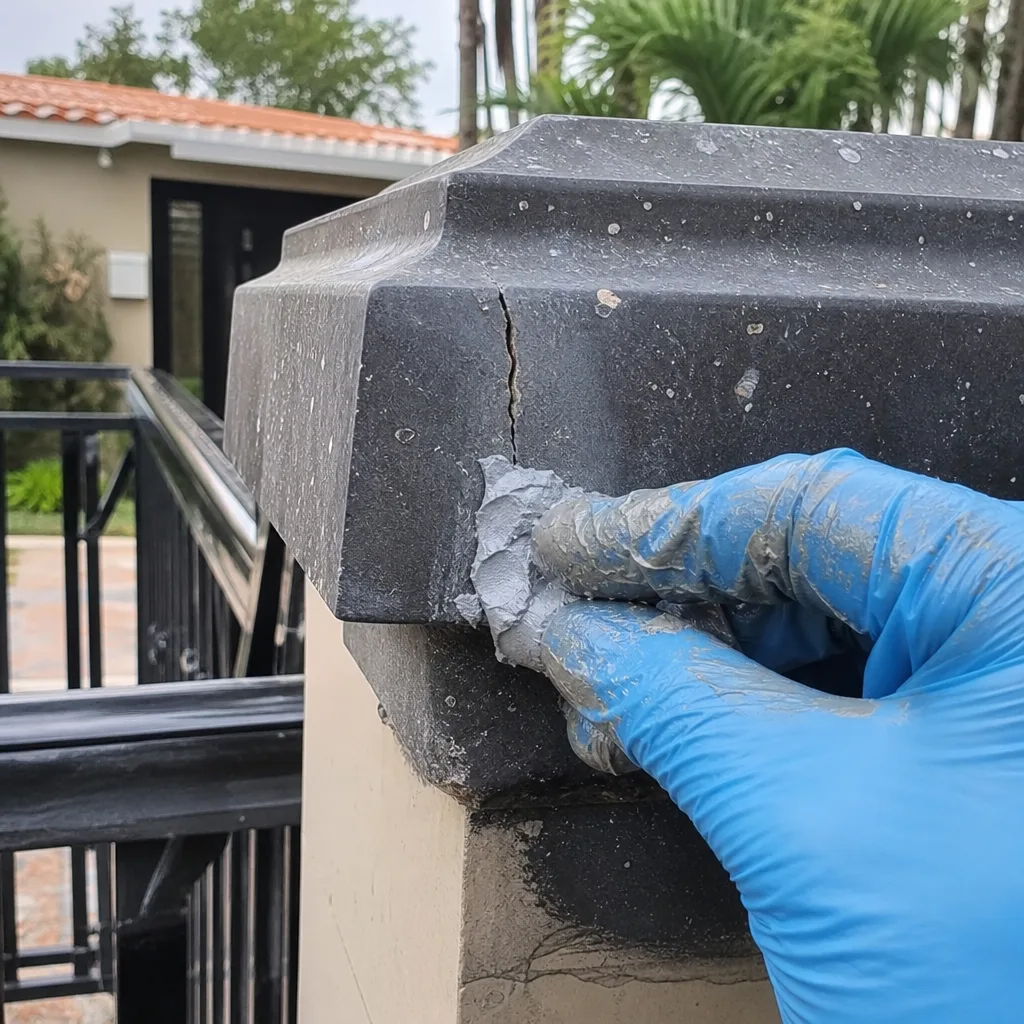
- Masonry or stucco-clad pillars that support gate hinges or operators. Even cosmetic stucco repair over a structural pillar can require permit verification if the repair exceeds 10 square feet.
- Gate frames modified to change the opening width by more than 4 inches, which alters the wind-load calculation under FBC Section 1609.
- Any new electrical circuit, defined as wiring run from a source panel to a new destination, or extension of an existing circuit beyond its original scope.
Maintenance elements that do not trigger permitting:
- Operator replacement where the existing electrical supply, disconnect, and conduit are reused. This is explicitly maintenance under FBC 105.1 commentary.
- Hinge replacement on an existing post, provided the post itself is not modified or replaced.
- Photo-eye, safety edge, or loop detector replacement, even if the component is upgraded to a different model.
- Control board or receiver replacement within the operator enclosure.
- Welding of decorative scrollwork or pickets, provided the repair does not modify the gate frame’s structural members.
The wind-load provision deserves specific attention in Miami Beach. FBC Section 1609 requires exterior gates in wind-borne debris regions to resist design wind pressures based on exposure category, height, and topography. Miami Beach is Exposure Category D (adjacent to open water) with a basic wind speed of 175 mph per ASCE 7-22. A gate modification that reduces the effective structural section, such as cutting vertical pickets to install a wider operator arm, can drop the assembly below its original wind-load rating. That modification requires engineering review and permit, even if the gate “looks the same.”
We’ve documented this exact scenario in our records from a 2022 job on Pine Tree Drive. A previous contractor had widened the gate opening by 6 inches to accommodate a larger vehicle, cutting the top rail and splicing it with a smaller section. The splice failed inspection when the property sold, and we were called to rebuild the gate to engineered specifications. The repair cost $4,800, and the retroactive permit added six weeks to the closing timeline. Under Haven Standard Clause 4, we photographed the original splice, the engineered replacement drawing, and the final weld penetration before we left.
Miami-Dade County’s Stricter Overlay Rules
Miami-Dade County adopts the Florida Building Code with amendments that are stricter than state minimums, particularly for automated gate operators in coastal high-hazard areas. These amendments are codified in the Miami-Dade County Code, Chapter 8, and affect every gate repair in Miami Beach.
Product Approval requirement: All automated gate operators installed in Miami-Dade County must carry a Miami-Dade County Product Control Notice of Acceptance (NOA) or a Florida Product Approval. This is stricter than the UL 325 listing required elsewhere. A BFT operator with UL 325 certification but no Miami-Dade NOA cannot legally be installed here, though it can be repaired. We’ve encountered this with homeowners who purchased operators online, and we always verify NOA status before quoting installation work.
Wind-borne debris compliance: Miami-Dade Amendment 1609.1.2 requires gates in the wind-borne debris region to either be impact-rated or protected by an impact-rated system. For automated driveway gates, this typically means the gate itself must meet TAS 201, TAS 202, and TAS 203 testing standards, or the property must have operational hurricane shutters that protect the gate opening. A repair that modifies the gate leaf, such as adding a pedestrian wicket or cutting for a new lock, can void the existing impact rating and require re-certification.
Electrical bonding and grounding: Miami-Dade Amendment 250.4 requires all metal gate structures within 5 feet of a pool, spa, or water feature to be bonded to the pool equipotential bonding grid. This affects numerous Miami Beach properties, particularly in the Venetian Islands and Sunset Harbour where pools are common. A gate post replacement in these locations requires electrical inspection even if the gate itself is not automated.
Flood zone considerations: Miami Beach’s flood zone designation (mostly AE and VE) requires that electrical equipment serving gates be elevated above the base flood elevation or be rated for submersion. A new electrical run to a gate operator must include flood-proofing details on the permit drawings. We’ve documented installations where the original contractor ignored this, placing the disconnect at 18 inches above grade in a VE zone where 36 inches was required. The permit correction cost the homeowner $1,400 in revised drawings and re-inspection.
The county’s Product Control database is public and searchable. Before any operator installation in Miami Beach, we verify that the specific model number has an active NOA. Linear’s ACT-31B, for example, carries a current NOA; some Viking models do not. This verification takes two minutes and prevents a failed inspection that costs far more in delay than in dollars.
What “Like-for-Like Replacement” Actually Means
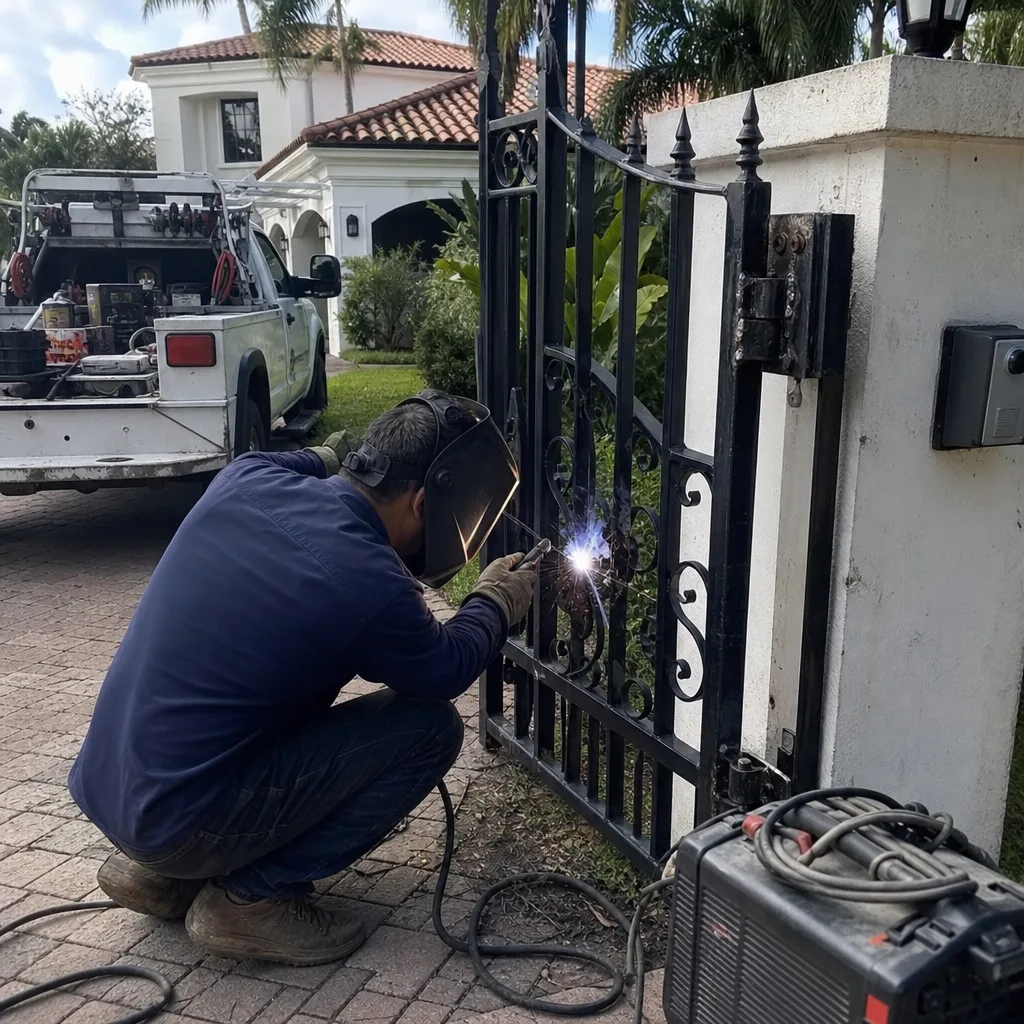
Contractors frequently invoke “like-for-like replacement” to avoid permit fees and inspection timelines. The term has a specific legal meaning under Florida law, and it is narrower than many contractors represent.
Under FBC Section 105.1 and the accompanying administrative rule 61G20-3.008, “like-for-like” means:
- The replacement component is the same make and model as the original, or a listed equivalent with identical specifications.
- The replacement does not alter the structural, electrical, or mechanical function of the assembly.
- The replacement does not increase the load on any structural element, including wind load, dead load, or live load.
- The replacement is installed in the same location with the same mounting configuration.
What this excludes in practice: upgrading from a 1/2 HP operator to a 1 HP operator, even if the brand stays the same, because the increased torque load changes the structural demand on the gate post. Swapping a FAAC 415 for a FAAC 402, same horsepower, same mounting pattern, same duty cycle, is like-for-like. Swapping that 415 for a BFT Phobos BT A40 with higher torque and a different mounting geometry is not, even if the gate “works the same.”
Similarly, replacing a wooden gate leaf with an aluminum one of identical dimensions is not like-for-like because the mass, wind load, and hinge loading change. Replacing a steel gate leaf with a steel gate leaf of identical section properties, hung on the same hinges at the same locations, is like-for-like.
The distinction matters for liability. A contractor who performs non-like-for-like work without a permit has violated FBC 105.1, and the work is not grandfathered. If the gate fails and causes injury, the absence of permit and inspection becomes evidence of negligence in civil litigation. We’ve reviewed estimates from other companies where “like-for-like” was claimed for clearly non-complying work, and we provide free second opinions on any written estimate for exactly this reason. Bring the paperwork and we’ll flag the permit issues before you sign.
In Miami Beach’s competitive real estate environment, we’ve also seen “like-for-like” used to justify unpermitted post replacements. The argument runs: “We’re putting back the same size post in the same hole.” But the Florida Building Code does not recognize this exception. Any new concrete footing or below-grade post replacement is structural work requiring permit, regardless of dimensional similarity. The inspector verifies concrete strength, embedment depth, and reinforcement, none of which are visible after backfill.
How to Look Up Permits on the Miami Beach Building Portal
Before hiring any contractor for Gate Repair services in Miami Beach, you should verify whether the property has open or expired permits related to the gate, and whether the contractor has pulled permits on similar jobs. The Miami Beach building portal makes this straightforward.
Step-by-step permit lookup for your property:
- Navigate to the Miami Beach e-Gov portal at the city’s official website. Search “Miami Beach building permits” and select the link ending in .gov.
- Select “Permit Search” from the main menu, then “Search by Address.” Enter your full property address as it appears on your tax bill. Miami Beach uses a specific address format; “1234 Pine Tree Dr” may require “1234 PINE TREE DR” or “1234 PINE TREE DRIVE” depending on the record vintage.
- Review the permit history. Look for permit types: “Fence/Gate,” “Electrical,” “Structural,” or “Miscellaneous.” Gate-specific permits are often filed under “Fence/Gate” or “Miscellaneous” depending on the permit technician’s classification.
- Check permit status: “Issued” means active and incomplete; “Final” means completed and inspected; “Expired” means the work was not finished within the validity period; “Revoked” means the permit was cancelled, often for non-compliance.
- Click any permit number to view details: scope of work, contractor name, issue date, and inspection results. The inspection tab shows whether each required inspection passed, failed, or was waived.
What to look for before hiring a contractor:
- An open “Fence/Gate” permit that was never finalized. This creates a title defect and may require the original contractor to close it or a new contractor to assume it with a permit revision.
- Electrical permits for gate operators that show no final inspection. The operator may be operational but not code-compliant, which matters for insurance and resale.
- Permits pulled by a contractor with a different name than the one proposing your job. This can indicate the original contractor is unlicensed or has subcontracted without disclosure.
Contractor license verification:
From the same portal, select “Contractor Search” and enter the contractor’s license number. Verify that the license is active, that “Gate” or “Fence” appears in the approved categories, and that there are no pending disciplinary actions. In Miami Beach, a contractor performing gate work must hold a Miami-Dade County certificate of competency or a state-certified license with the appropriate category. A handyman license or residential contractor license without the structural or electrical endorsement cannot legally perform permitted gate work.
We encourage every homeowner to perform this verification before signing any estimate. It takes ten minutes and has saved our customers from unpermitted work that would have surfaced at closing. Under Haven Standard Clause 1, we provide our license number on every written estimate so you can verify it directly.
The Inspection Sequence: What Inspectors Actually Check
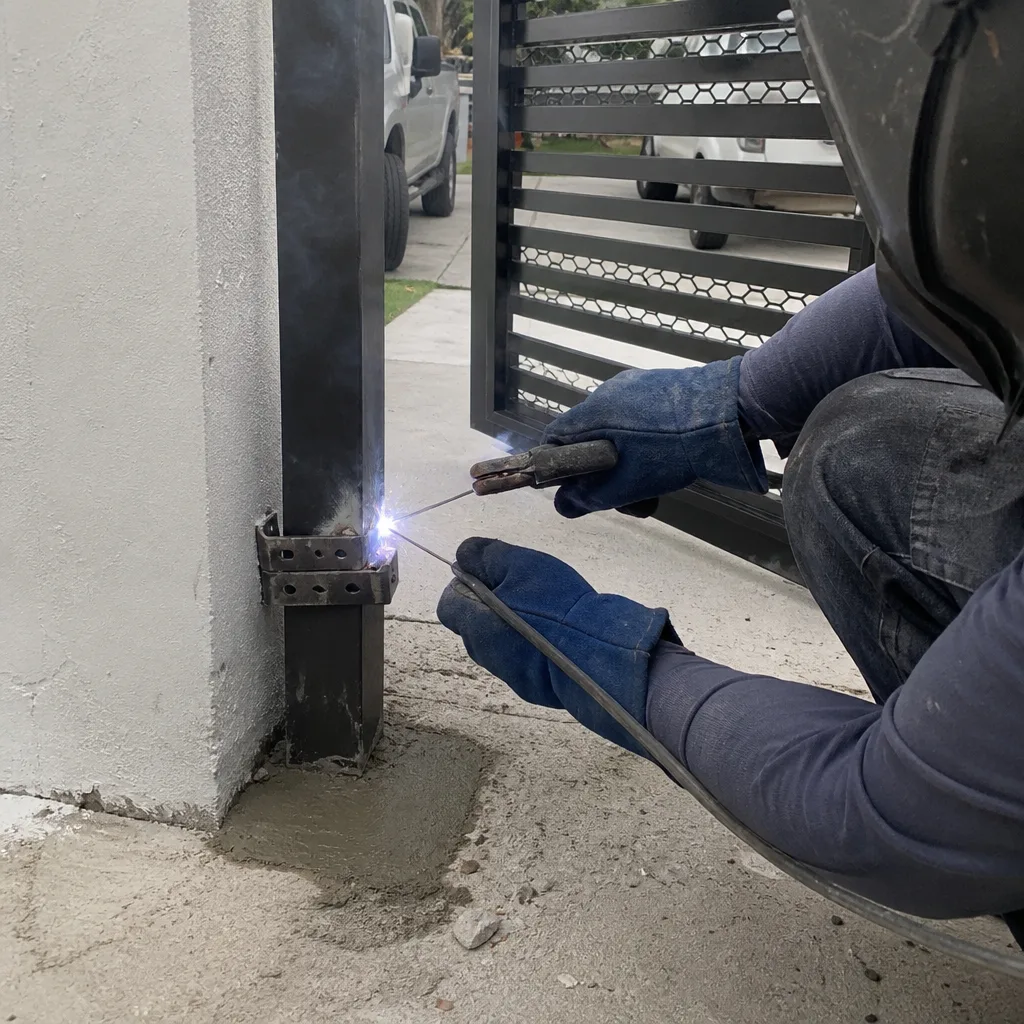
When gate work does require a permit, the inspection sequence in Miami Beach follows a predictable pattern. Understanding what inspectors actually check helps you prepare and helps you evaluate whether your contractor knows the process.
Typical inspection sequence for a permitted gate post replacement with new operator:
- Foundation/ footing inspection: The inspector verifies excavation depth, concrete mix design (minimum 2,500 psi in Miami-Dade), post embedment, and reinforcement if required. The post must be plumb and the footing must extend below the frost line, which in Miami Beach is nominal but still specified at 12 inches minimum. This inspection must occur before backfill.
- Framing/ structural inspection: For masonry pillars or metal gate frames, the inspector checks dimensions against approved plans, weld quality if applicable, and connection details. For automated gates, the inspector verifies that the gate structure can resist the design wind load with the operator attached.
- Rough electrical inspection: The inspector examines conduit routing, conductor sizing, grounding and bonding, disconnect location, and flood elevation compliance. In Miami Beach’s VE zones, the disconnect must be at or above 36 inches above grade. The inspector will also verify that the operator model matches the Product Approval or NOA on file.
- Final inspection: The inspector observes gate operation, tests safety devices (photo-eye, safety edge, loop detector), verifies entrapment protection settings per UL 325, and confirms that the gate reverses within 2 seconds of contact. The inspector also checks that warning signs are posted and that the manual release is accessible.
What inspectors do not check: aesthetic finish quality, paint color, remote range beyond basic functionality, or smart-home integration. These are between you and your contractor.
Common failure points we’ve documented from inspection records:
- Operator installed without a current Miami-Dade NOA. This is an immediate fail with no partial credit.
- Safety edge not wired to the monitored input. Many older operators have a simple contact input; UL 325-compliant installation requires a monitored edge that detects wire faults.
- Disconnect not within sight of the operator. FBC Article 430 requires the disconnect to be visible from the operator location.
- Gate force settings exceed UL 325 limits. The inspector may use a force gauge; settings above 40 lbf on a swing gate or 50 lbf on a slide gate fail.
- No manual release accessible from outside the gate. This is a life safety requirement for emergency access.
In our experience, contractors who have not worked in Miami Beach frequently fail on the NOA verification and the flood elevation. These are Miami-Dade-specific requirements that don’t apply inland, and out-of-area contractors often miss them. We verify both before quoting because a failed inspection extends the project timeline and adds re-inspection fees.
Permit Costs, Timeline, and When They’re Worth It
Permit costs in Miami Beach are structured to encourage compliance rather than penalize it, but the total cost of permitted work includes more than the permit fee itself.
Miami Beach permit fee structure for gate work:
| Permit Type | Base Fee | Valuation Trigger | Additional Fees |
|---|---|---|---|
| Fence/Gate (non-structural) | $85 | Project value under $1,000 | $50 plan review if plans required |
| Fence/Gate (structural) | $125 | Project value $1,000-$5,000 | $75 plan review; $50 per inspection |
| Electrical (operator only) | $95 | Any new circuit | $50 plan review; $50 per inspection |
| Combined structural + electrical | $195 | Project value over $5,000 | $125 plan review; $50 per inspection |
Timeline: Plan review typically takes 5-10 business days for standard gate permits. Inspections are generally available within 2-3 business days of request. A typical permitted gate post replacement with new operator takes 3-4 weeks from application to final, compared to 3-5 days for unpermitted maintenance work.
When the permit is worth the time and cost:
- The work is structural: post, footing, or pillar replacement. The permit protects your title and provides third-party verification of the installation.
- The property is or will be sold within five years. Title companies flag unpermitted structural work, and the cost of retroactive permitting exceeds the original permit fee.
- The gate is in a flood zone or near a pool, where Miami-Dade amendments create specific compliance requirements that are difficult to verify without inspection.
- The work involves a new operator model that requires Product Approval verification. The inspection confirms the model is legal for installation.
When the permit may not be necessary:
- Pure maintenance: motor replacement on existing electrical supply, hinge replacement, safety device adjustment.
- Emergency repairs to restore security or safety, where the work is explicitly temporary and will be followed by permanent permitted work. Miami Beach allows emergency repairs without permit if a permit application is filed within 72 hours.
- Properties held long-term with no sale contemplated, where title issues are not a concern. This is a risk assessment, not a compliance recommendation.
Our pricing reflects this distinction. A Linear operator replacement with existing electrical supply, documented under Haven Standard Clause 1, runs between $1,200 and $2,400 depending on operator model and arm configuration. The same job with new electrical run, permit, and inspection runs between $2,800 and $4,200. We quote both scenarios separately so you can see exactly what the permit adds and decide accordingly. The price is written and handed over before any work starts.
Common Mistakes to Avoid
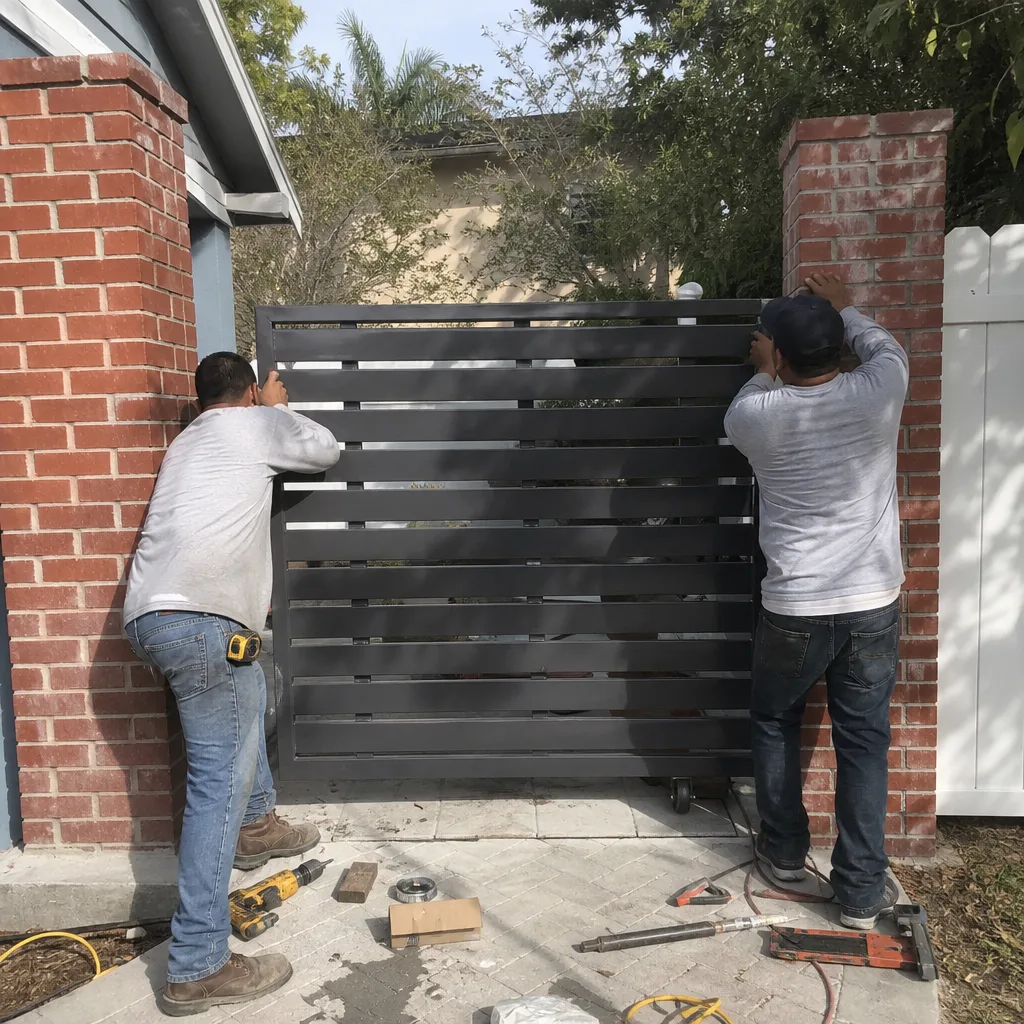
- Assuming the contractor handles permits. In Florida, the property owner is legally responsible for permit compliance. A contractor who says “don’t worry about it” or “we’ll take care of it later” is creating liability that attaches to you, not them.
- Accepting “like-for-like” for clearly changed work. If the new operator is a different horsepower, the new post is a different depth, or the new gate is a different material, it is not like-for-like. Get the permit.
- Ignoring open permits from previous owners. Miami Beach’s portal shows all permits by address, not by owner. An open permit from 2019 can delay your 2026 sale. Close it before it becomes a problem.
- Hiring based on “no permit needed” as a selling point. This is sometimes legitimate for maintenance work, but for structural work it’s a warning sign. The contractor is either uninformed or avoiding accountability.
- Skipping the NOA check for operators. We’ve seen $2,800 operators installed that cannot pass inspection because the model lacks Miami-Dade approval. The replacement cost falls on the homeowner.
- Not photographing the pre-construction condition. If a permit dispute arises, documentation of what existed before the work is essential. Under Haven Standard Clause 4, we photograph every job before, during, and after, and provide the photo log to the homeowner.
- Confusing “passed inspection” with “good work.” An inspection verifies code minimums, not craftsmanship. A gate can pass inspection and still have sloppy welds, poor alignment, or premature wear. Evaluate the contractor’s documentation and warranty separately from the permit status.
When to Call a Professional
Call a licensed gate contractor when the repair involves structural elements, electrical work, or any modification that could affect wind-load compliance. For help choosing one, see our How to Hire a Gate Repair Contractor in Miami Beach: A Step-by-Step Guide. In Miami Beach’s high-wind, high-salt environment, even maintenance work benefits from a contractor who understands the local amendments and can document the condition they found.
Specific scenarios where professional evaluation is warranted: a gate that has shifted after a storm and may have footing damage; an operator that trips the breaker, suggesting a ground fault; any gate near a pool where bonding requirements apply; a property transaction where permit status needs verification; and any estimate that claims “no permit needed” for work that sounds structural.
Vance Gate Repair Miami Beach offers free estimates in Miami Beach - call (786) 371-2767. We provide a written scope and price before any work starts, and we’ll flag permit requirements as part of the estimate so there are no surprises. If you have an estimate from another company, bring it in for a free second opinion; we’ll review the permit implications at no cost.
Frequently Asked Questions
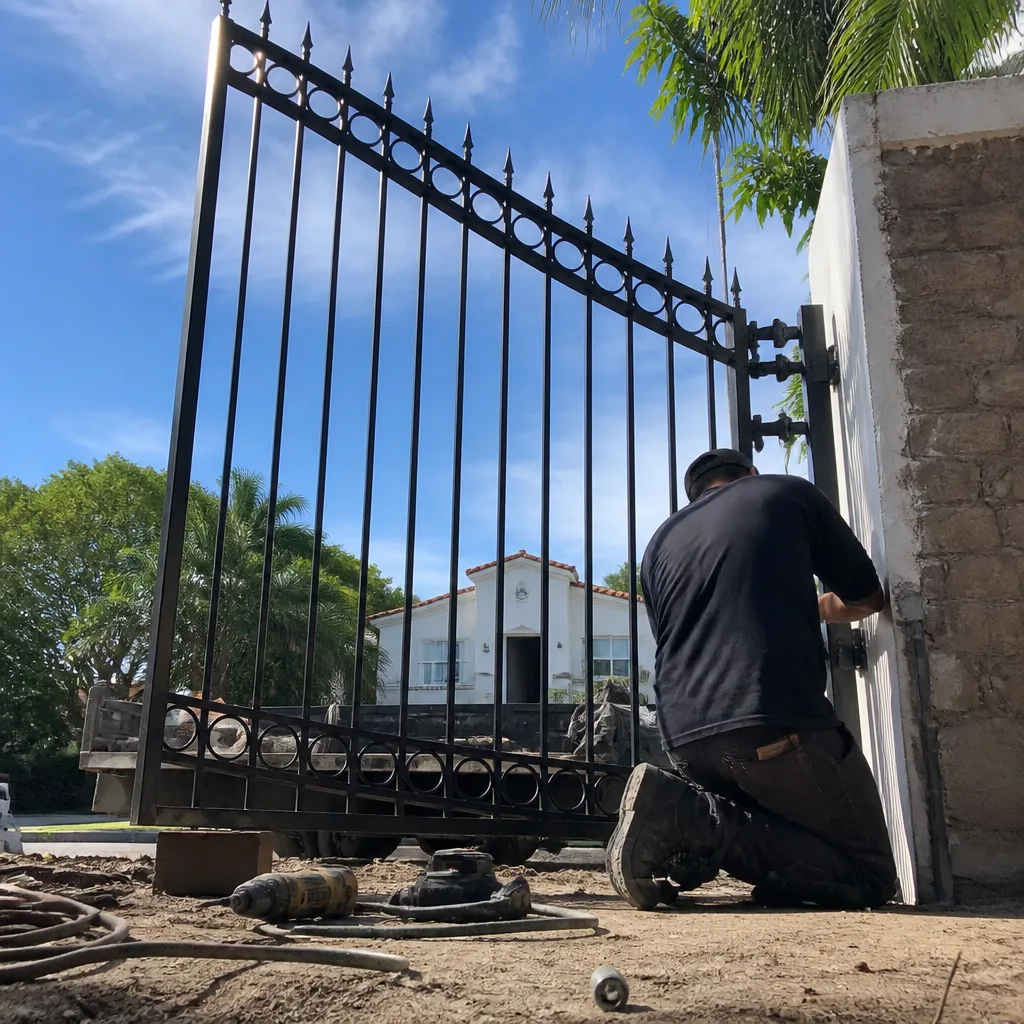
No, if the replacement uses the existing electrical supply and does not modify the gate structure. A direct motor swap on existing wiring is maintenance under Florida Building Code Section 105.1. If the job requires a new circuit from the main panel, a permit is required for the electrical work. Call (786) 371-2767 for a written estimate that specifies which scenario applies to your setup, and explore more guides & resources on our blog.
Most gate-specific permits in Miami Beach cost between $85 and $195 in base fees, plus $50 to $125 for plan review and $50 per inspection. Structural work with electrical components falls at the higher end. The total permit cost for a typical permitted post replacement with new operator is $300 to $450. We itemize permit costs separately in every written estimate so you see exactly what you’re paying.
No. Florida law requires permits to be obtained before work begins. Retroactive permitting is possible but requires exposing work for inspector verification, adds significant cost, and creates a compliance record that can affect insurance and resale. A contractor who suggests “pulling it later” for structural work is proposing an illegal sequence.
The unpermitted work typically surfaces during the title search or buyer inspection. Remediation options include retroactive permitting, a hold-harmless agreement, or price reduction. In Miami Beach’s market, any of these can delay closing by weeks. Structural gate work without permit is a material disclosure item under Florida’s seller disclosure requirements.
Yes. All automated gate operators installed in Miami-Dade County must have a current Miami-Dade County Product Control Notice of Acceptance (NOA) or Florida Product Approval. This is stricter than the UL 325 listing required elsewhere. We verify NOA status for every operator we quote in Miami Beach, and we provide the NOA number on request.
Search the Miami Beach e-Gov portal by your property address. Look for permit types “Fence/Gate,” “Electrical,” or “Structural.” If the work was performed before digital records (roughly pre-2000 in Miami Beach), contact the building department for microfilm or paper records. We include permit verification as part of our free estimate process when historical compliance is a concern.
The Bottom Line
Most gate repairs in Florida need no permit, but the exceptions, structural and electrical work, carry consequences that outlast the repair itself. The dividing line is clear in the Florida Building Code: maintenance and replacement on existing systems is exempt; new structural elements and new circuits are not. Miami-Dade County’s amendments for wind load, product approval, and flood elevation add layers that contractors from outside the area often miss. Before hiring anyone, verify their license, check your property’s permit history, and get the scope and price in writing. The ten minutes of due diligence protects your title, your safety, and your closing timeline.
Written by Adrian Vance, Owner at Vance Gate Repair Miami Beach, serving Miami Beach since 2014.