
Last updated September 21, 2026
Free on-site gate assessment - hinges, posts, and your LiftMaster or Nice gate operator checked before anything is quoted
The assessment is free and the quote is the invoice.

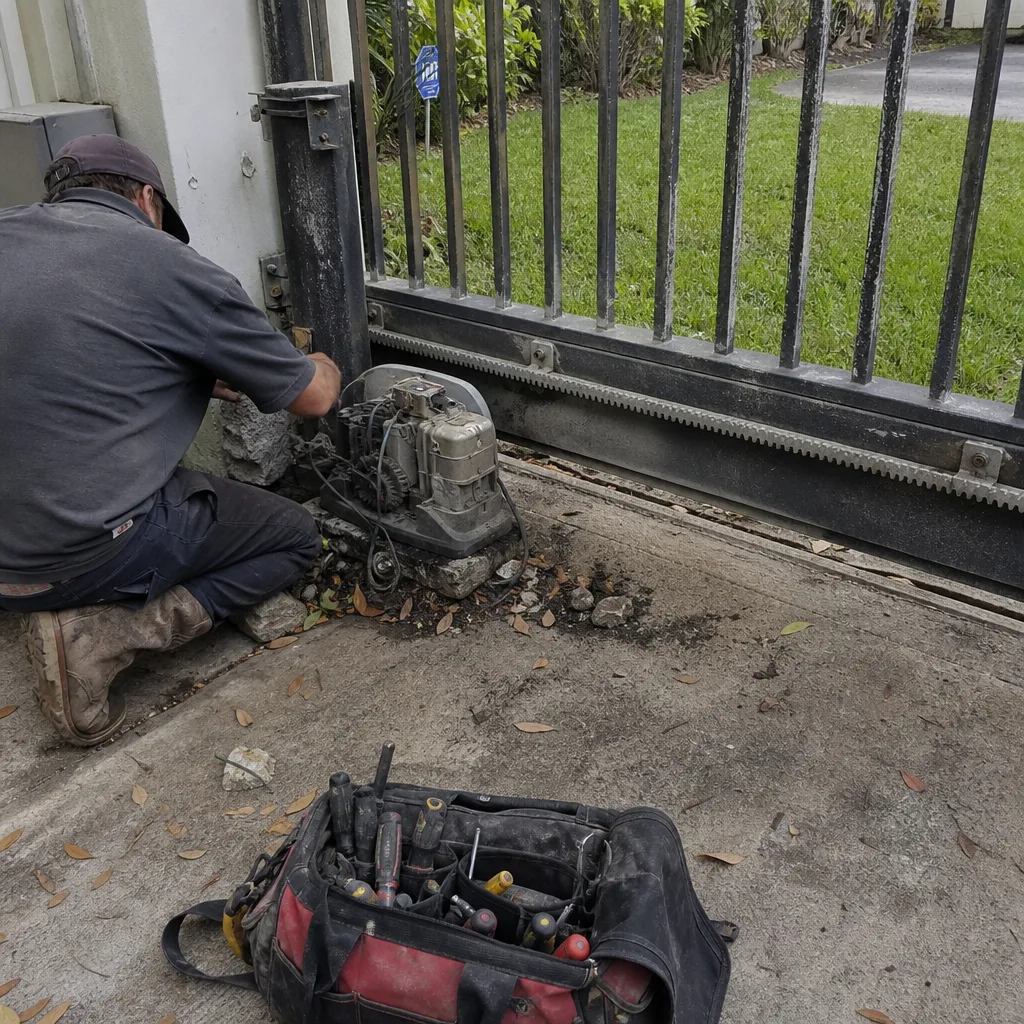 Before
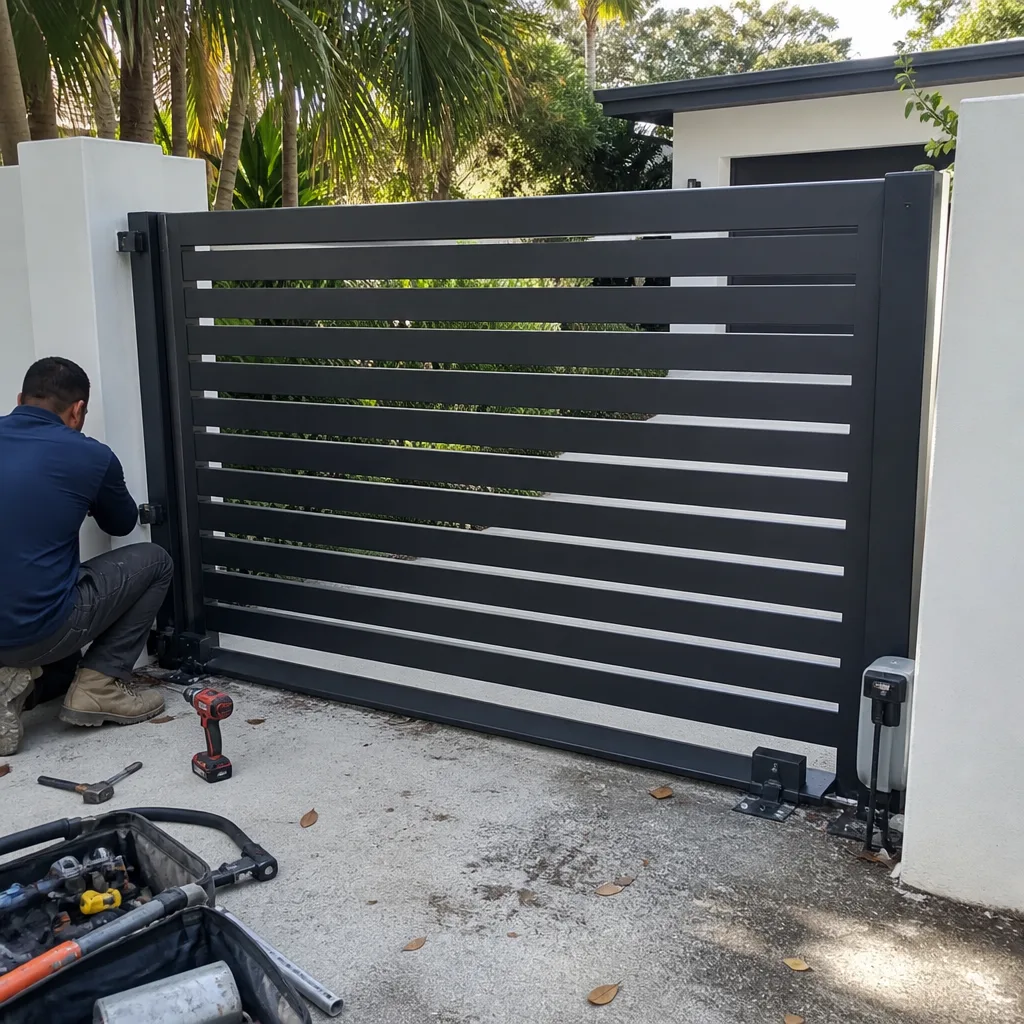 After
After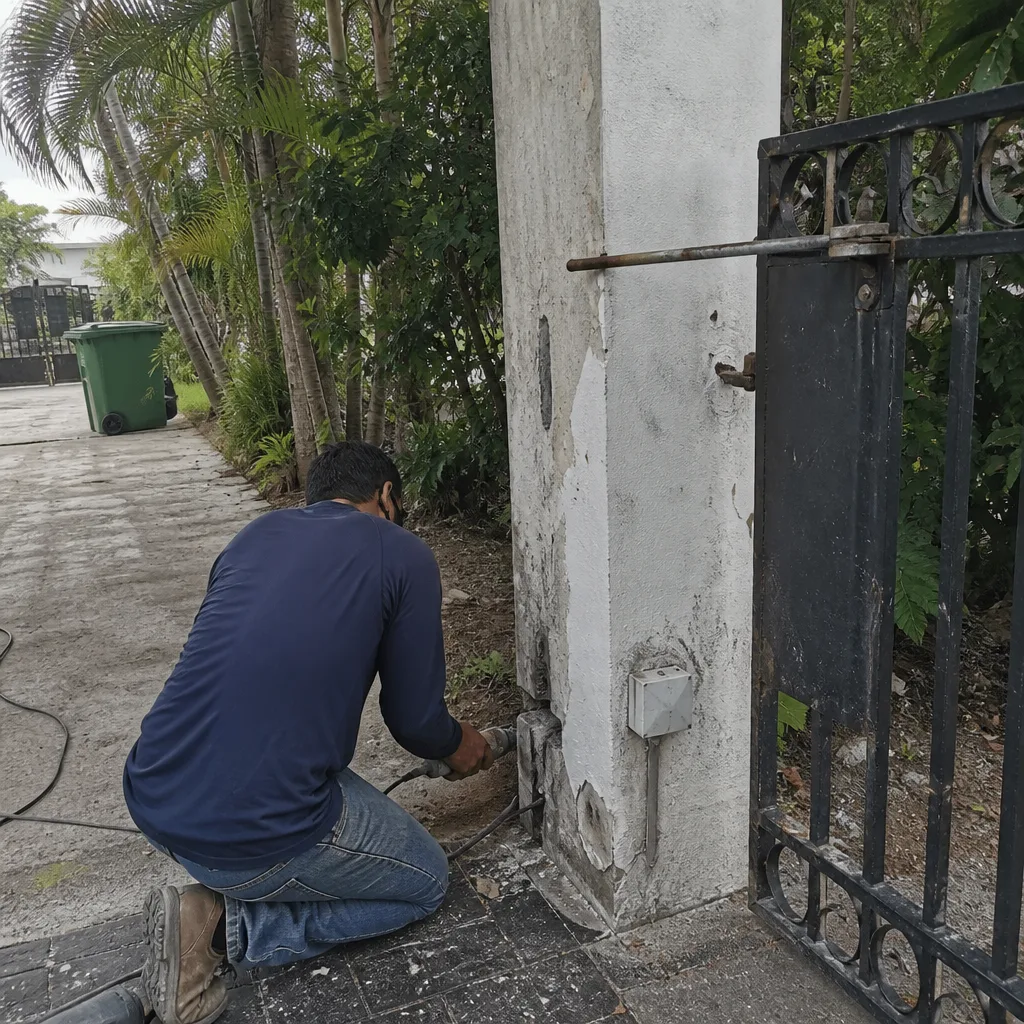 Before
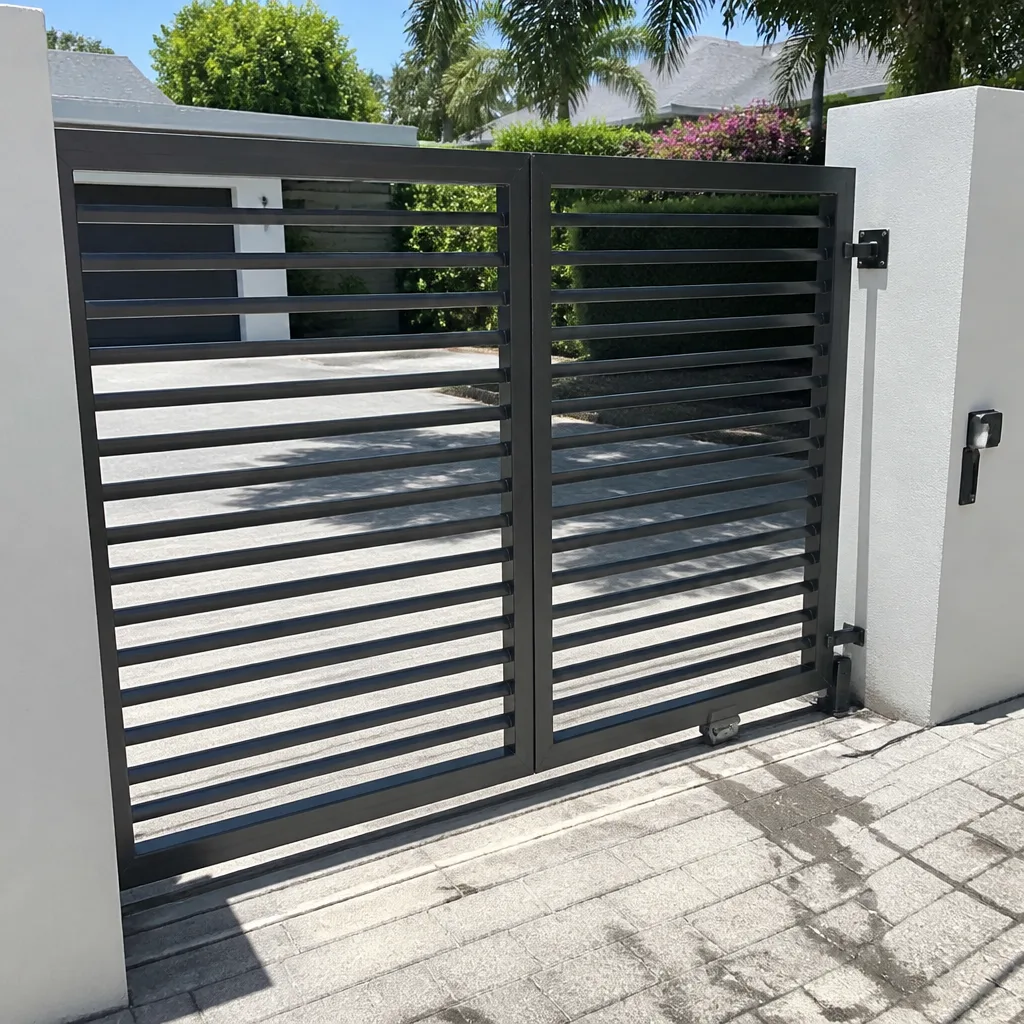 After
After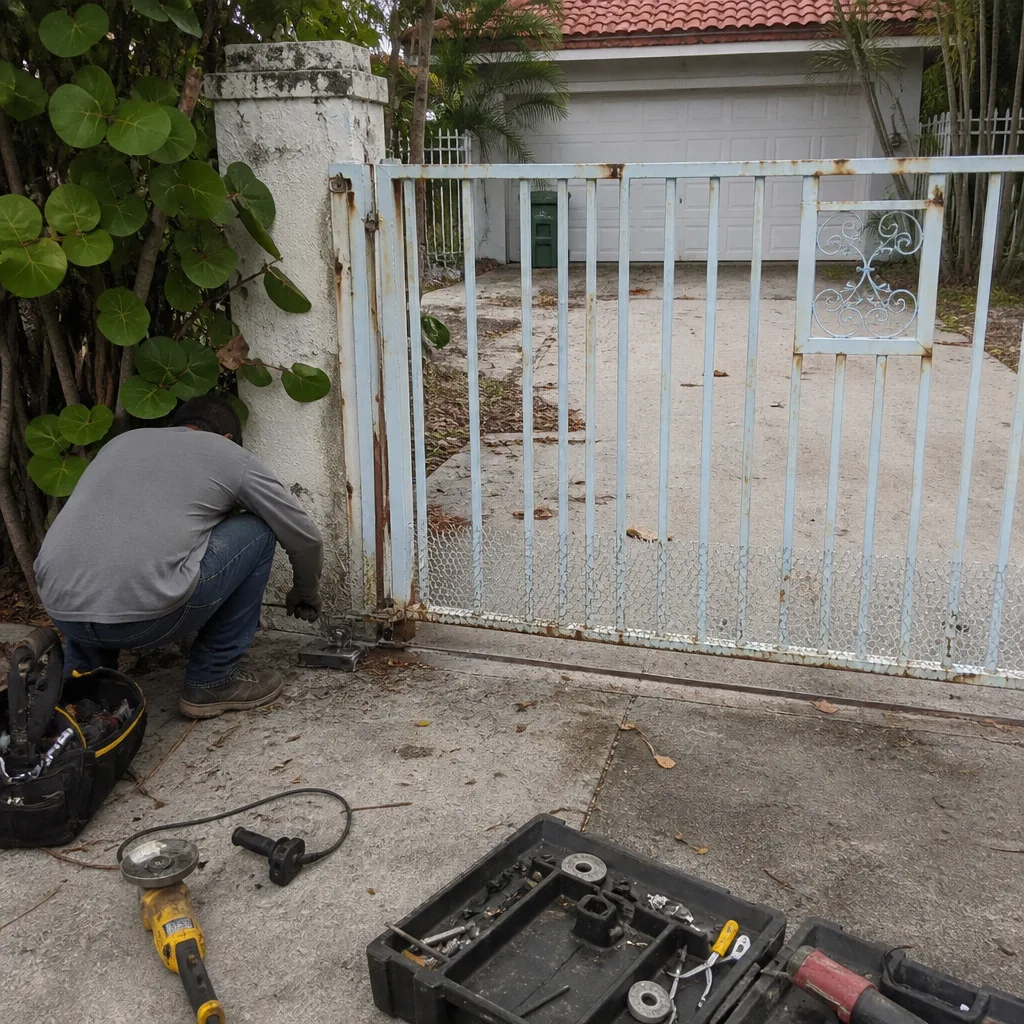 Before
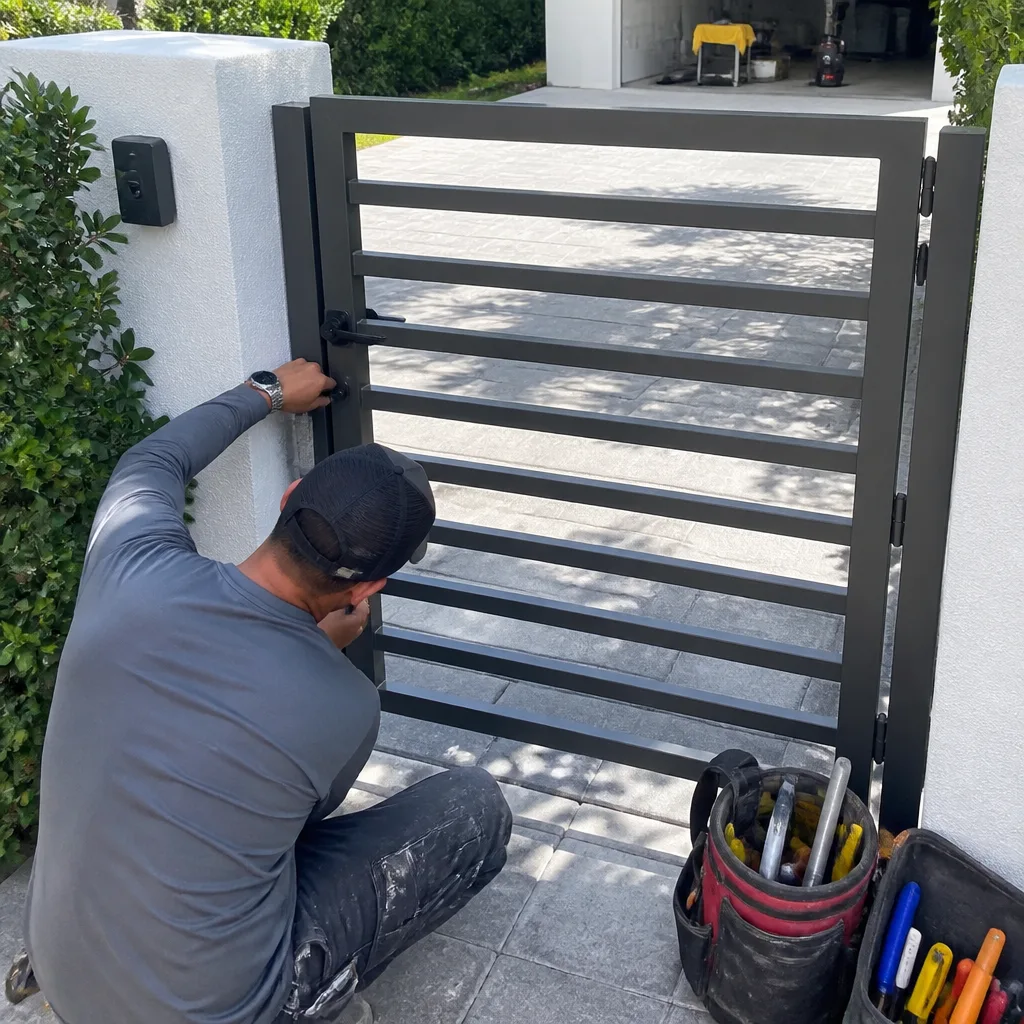 After
AfterDIY vs Professional Gate Repair: The Miami Beach Homeowner’s Decision Guide
Here’s a fact most gate companies won’t tell you: adjusting your own limit switches doesn’t just risk a malfunction. It can void the UL 325 certification on your operator, and if that gate later damages a vehicle or injures someone, your homeowner’s insurance carrier may deny coverage based on uncertified modifications. In Miami Beach, where automated gates protect everything from Art Deco courtyard entrances to waterfront estates on Pine Tree Drive, this distinction matters more than most homeowners realize. This guide draws a precise line between mechanical maintenance you can handle yourself and electrical work that requires a licensed technician, so you know exactly where your jurisdiction ends before you pick up a wrench. For professional help, see our Gate Repair services.
Quick Answer
Most Miami Beach homeowners can safely perform mechanical maintenance like hinge lubrication, debris clearing, and visual hardware inspection on their gates. Any work involving the low-voltage electrical system, access control wiring, or automated operator settings requires a licensed gate technician to maintain UL 325 compliance and insurance coverage. The dividing line is simple: if the task touches electricity or safety sensors, it’s professional territory.
Table of Contents
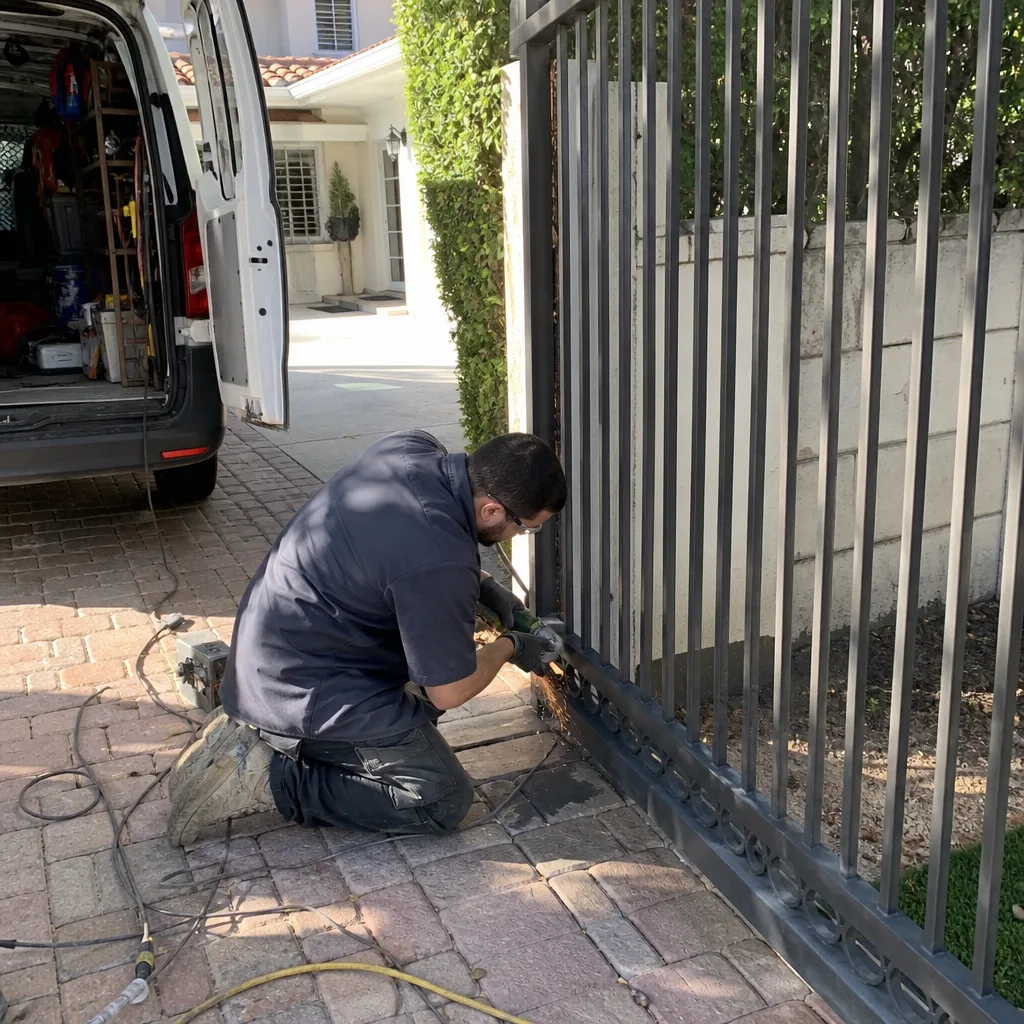
- The Mechanical vs. Electrical Divide
- DIY-Safe Tasks: What You Can Handle
- Professional-Only Territory: Electrical, Safety, and Code
- UL 325 Compliance: The Certification Homeowners Overlook
- Three Repairs That Look DIY-Safe But Aren’t
- How to Document a DIY Repair Like a Professional
- Miami-Dade Liability: When Repair History Becomes Evidence
- DIY vs. Professional: Real Cost Comparison in Miami Beach
 Before
 After
AfterThe Mechanical vs. Electrical Divide
The entire DIY vs. professional question for gate repair comes down to one question: does the repair involve the low-voltage electrical system or the mechanical system? This isn’t about skill level or tool ownership. It’s about liability, certification, and what your insurance carrier will recognize if something goes wrong.
Mechanical systems on a gate are the visible moving parts: hinges, wheels, tracks, chains, gears, and the gate leaf itself. These components wear predictably. Hinges develop play. Rollers flatten. Chain stretches. A homeowner with basic tools and patience can inspect, lubricate, and in some cases replace these parts without creating downstream problems.
Electrical systems are everything else: the operator motor, control board, transformer, photocells (photo-eyes), loop detectors, keypads, intercoms, and the low-voltage wiring that connects them. These systems are governed by UL 325, the standard for door, drapery, gate, louver, and window operators and systems. UL 325 specifies force limits, entrapment protection, and safety-device requirements. Once a homeowner opens the operator housing or adjusts internal settings, they’ve entered territory where their work won’t be recognized by the certification body or, in many cases, their insurance provider.
In Miami Beach, this distinction carries extra weight. The salt air accelerates corrosion on mechanical parts, which means homeowners perform maintenance more frequently. But the same humid, salty environment also degrades low-voltage connections faster than inland climates, making electrical diagnostics more complex. What looks like a simple “gate won’t close” problem might be moisture intrusion in a FAAC control board, a failing LiftMaster receiver affected by radio interference from nearby high-rises, or a BFT loop detector damaged by groundwater after a king tide.
We’ve found that the most expensive repairs in Miami Beach aren’t the initial failures. They’re the secondary damage caused when a homeowner correctly identifies a mechanical problem but accidentally disturbs an electrical component while fixing it. A gate that needed a $45 hinge replacement becomes a $680 operator rebuild because the control board was damaged during the mechanical work.
The rule we use at Vance Gate Repair Miami Beach home: if you need a multimeter to diagnose it, you need a technician to repair it.
DIY-Safe Tasks: What You Can Handle
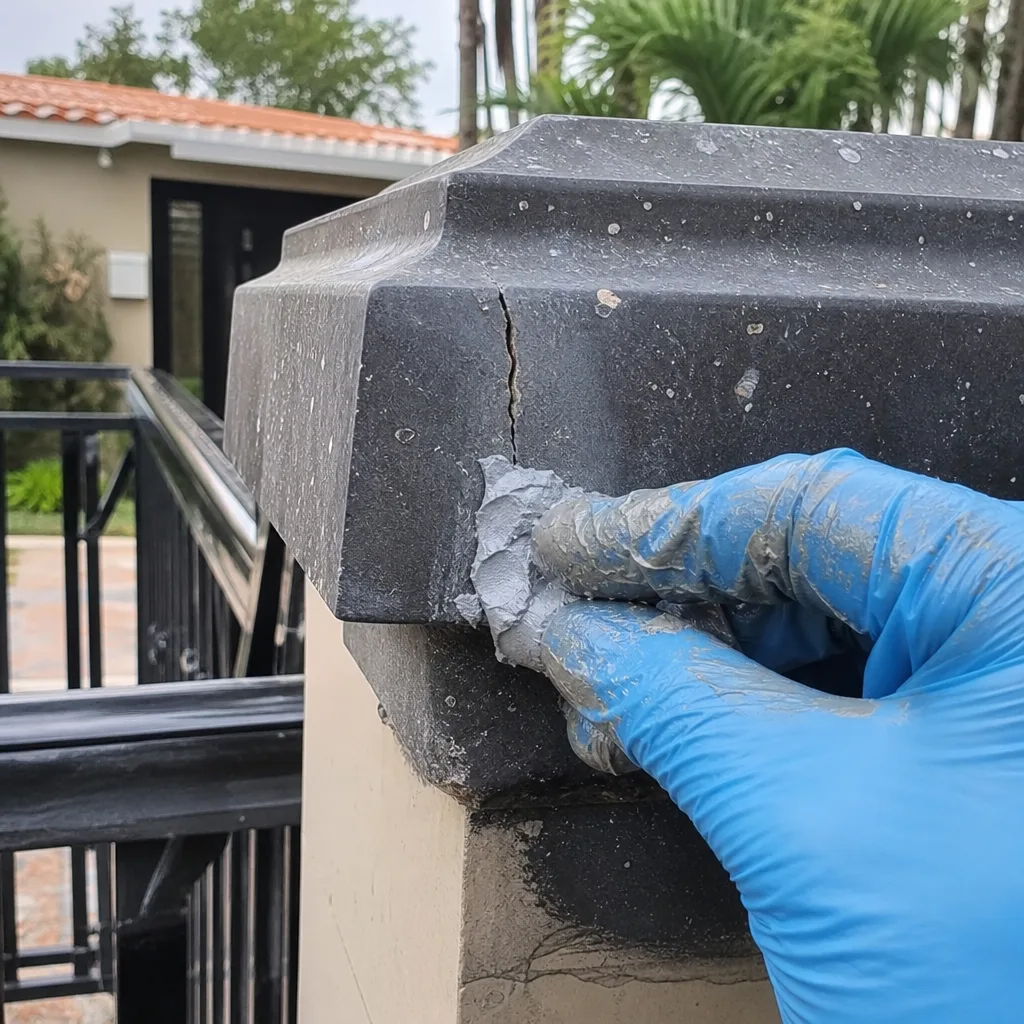
These mechanical tasks don’t touch the electrical system and won’t affect UL certification. Perform them on a regular schedule, especially in Miami Beach’s corrosive coastal environment.
Monthly Inspection Checklist
- Visual hardware scan. Walk both sides of the gate. Look for cracked welds, bent pickets, loose bolts, and rust blooms on hinges or latch hardware. In Miami Beach, check the bottom rail specifically for salt corrosion, which often starts where sprinkler overspray hits the gate.
- Hinge lubrication. Use a lithium-based grease on steel hinges, not WD-40, which evaporates and attracts grit. Work the gate manually through its full arc after lubricating to distribute the grease. If you feel binding or hear squealing, the hinge pin may be worn and need replacement.
- Track and roller cleaning. For sliding gates, clear debris from the track with a stiff brush. Check that rollers spin freely and aren’t flat-spotted. In South Beach and the Flamingo Park area, we regularly find sand accumulation from nearby beach access that accelerates roller wear.
- Chain or belt tension visual check. Look for sagging, rust, or damaged links. Do not adjust tension yourself; note the condition and call for service if you see problems. Chain tension adjustment requires measuring slack to manufacturer specification and often affects limit switch calibration.
- Photo-eye lens cleaning. Wipe the lenses of infrared safety sensors with a soft, dry cloth. Check that LED indicators on both units show alignment (typically solid green or red, depending on brand). Do not reposition the brackets; if realignment is needed, that’s professional work.
- Manual release test. Every operator has a manual release mechanism (usually a key or lever). Verify you can disengage the motor and move the gate by hand. This is your backup if the power fails during a storm.
What to Document
Even for simple maintenance, create a record. Date the work. Photograph hinge condition before and after lubrication. Note any unusual wear patterns. This documentation becomes valuable if you later need professional service; the technician sees the maintenance history instead of guessing.
Professional-Only Territory: Electrical, Safety, and Code
These tasks require a licensed gate technician. Not because they’re technically impossible for a motivated homeowner, but because performing them without proper certification creates liability exposure that most Miami Beach homeowners don’t realize they’re carrying.
- Operator control board work. Any adjustment inside the operator housing, including force settings, travel limits, or obstacle-detection sensitivity. These settings are calibrated to UL 325 force limits; changing them without proper equipment can make the gate non-compliant.
- Low-voltage wiring repairs or extensions. This includes photocell wiring, loop detector leads, keypad cables, and intercom lines. Miami-Dade requires low-voltage electrical work on automated gates to follow NEC Article 725; unlicensed work may fail inspection and void insurance.
- Safety device installation or replacement. Adding or replacing photo-eyes, edge sensors, or loop detectors. These devices must be positioned, wired, and tested to UL 325 standards; improper installation creates entrapment risk.
- Access control programming. Keypad code changes, remote programming, telephone entry system setup, or integration with home automation systems. These systems often involve encrypted communication protocols that require manufacturer-specific tools.
- Post-installation verification. After any significant repair, a gate operator must be tested with a force meter to verify it stops within UL 325 limits when encountering an obstruction. This requires calibrated equipment most homeowners don’t own.
In Miami Beach specifically, many properties in Mid-Beach and North Beach have gates installed before 2018, when UL 325 entrapment-protection requirements were significantly updated. A technician working on these older systems must evaluate whether the existing safety devices meet current standards, not just whether they function. This is code-compliance work, not maintenance.
At Gate Repair in Miami Beach, we service nine major automation brands, including LiftMaster, FAAC, BFT, and Linear. Each has proprietary diagnostic procedures and software. A homeowner attempting to troubleshoot a FAAC 770 control board with generic advice from a forum risks corrupting the programming or damaging the board’s surge protection, which in Miami Beach’s lightning-prone summer season is a costly vulnerability to create.
UL 325 Compliance: The Certification Homeowners Overlook
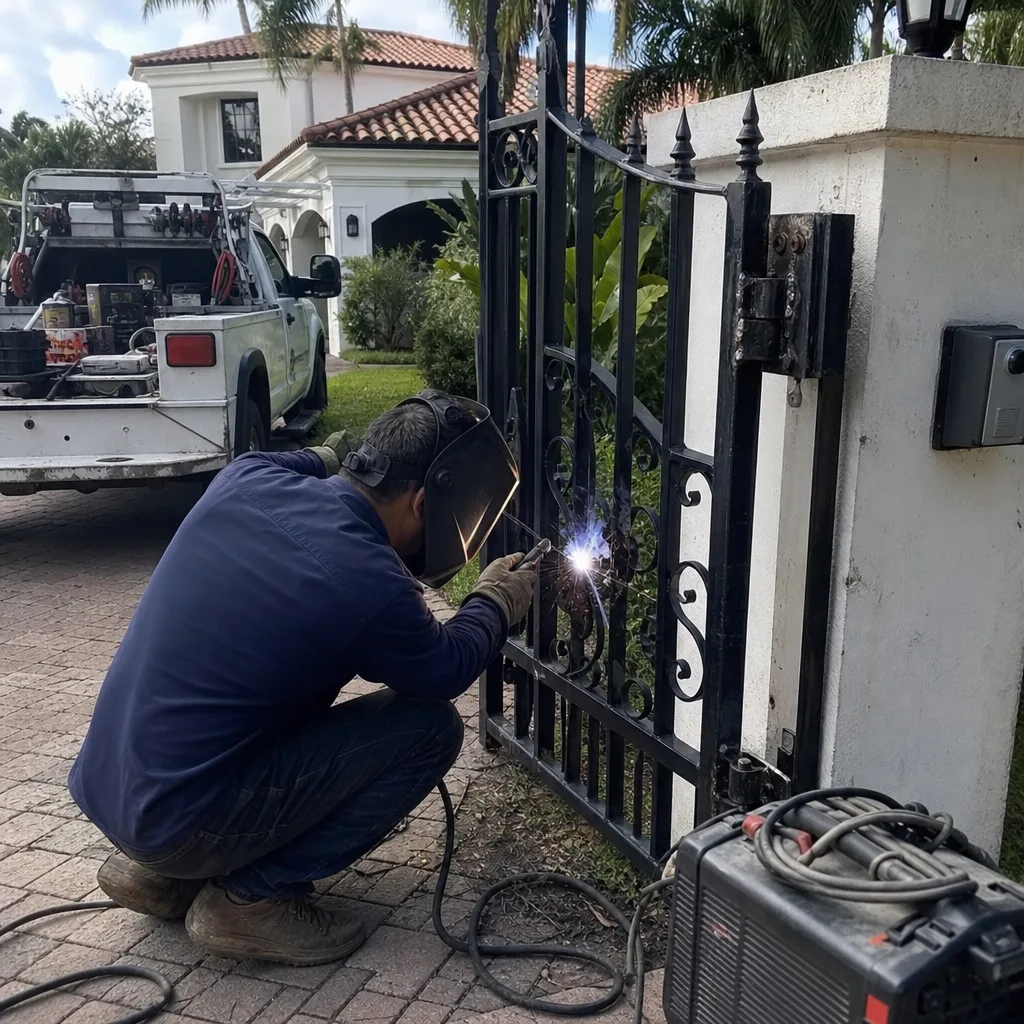
UL 325 is the safety standard that governs all automated gate operators in the United States. It’s not a building code that inspectors check during routine visits. It’s a product certification that manufacturers obtain by submitting their operators for testing. When you buy a LiftMaster or FAAC operator, the UL 325 mark on the label means that specific unit, configured exactly as tested, meets force and safety requirements.
Here’s what most homeowners don’t know: the certification is conditional on the operator remaining in its tested configuration. When you or an unqualified technician opens the housing and adjusts internal settings, you’ve modified a certified system. The UL mark no longer applies to that specific installation. If the gate later causes injury or property damage, the manufacturer may decline liability, and your insurance carrier may argue that unqualified modifications void your coverage.
We’ve seen this scenario in Miami Beach more than once. A homeowner in the Sunset Islands area adjusted their own travel limits after the gate started hitting the stop post. Six months later, a delivery driver claimed the gate struck their vehicle. The insurance adjuster requested maintenance records. The homeowner had none. The operator’s internal settings didn’t match factory specification. The claim became complicated in ways it never needed to be.
Professional technicians who work on automated gates understand UL 325 as a documentation discipline, not just a technical standard. At Vance Gate Repair Miami Beach, under The Haven Standard, we record the operator model, serial number, and all settings before we begin work. We photograph the control board configuration. After adjustment, we verify force limits with a calibrated meter and document the readings. The homeowner receives a copy. This creates an unbroken chain of certified work that preserves UL compliance and insurance protection.
The specific settings that most commonly get homeowners into trouble:
- Force adjustment potentiometers. These control how much resistance the operator will overcome before reversing. Setting them too high creates entrapment risk; too low, and the gate won’t close in wind or on a slight grade. Miami Beach’s afternoon sea breezes mean gates here often need more force than inland installations, but the exact setting must be measured, not guessed.
- Limit switch positions. These define where the gate stops in open and closed positions. Incorrect limits cause the gate to over-travel, stressing mechanical components and potentially hitting vehicles or pedestrians.
- Obstruction sensitivity. This determines how quickly the operator reverses when it meets resistance. UL 325 specifies maximum force and time thresholds; the setting must keep the gate within those limits across the full travel distance.
None of these settings can be safely adjusted by eye or by “try it and see.” They require a force meter, manufacturer documentation, and knowledge of the specific operator’s control logic.
Three Repairs That Look DIY-Safe But Aren’t
These repairs appear mechanical and straightforward. Homeowners attempt them regularly. In our experience across more than 22,000 gate repairs since 2014, these three consistently cause secondary failures when done without proper diagnostic equipment.
1. Chain Tension Adjustment
A loose chain on a sliding gate looks like a simple fix: tighten it until the slack disappears. But chain tension interacts with limit switch calibration, motor current draw, and sprocket alignment. Over-tightening increases load on the operator motor and can cause the control board to register a false obstruction. Under-tightening allows chain whip that damages the limit switch actuator.
The correct procedure: measure chain sag at midpoint (typically 1/2 to 3/4 inch for most residential operators), adjust tension evenly at both ends, then verify limit switch positions haven’t shifted. Finally, run a force test to confirm the operator still meets UL 325 limits under the new load. This requires a chain-breaker tool, torque wrench, and force meter, none of which are standard homeowner equipment.
In Miami Beach, salt corrosion often seizes tensioning hardware, making “simple” adjustment a battle with frozen bolts. We’ve replaced dozens of operator mounts that cracked because a homeowner applied leverage to a seized bolt instead of freeing it properly.
2. Travel Limit Setting
When a gate doesn’t open or close fully, the limit switches are the obvious suspect. Most operators have mechanical or electronic limit settings that look adjustable with a screwdriver or programming button. But the limit position affects more than stop points. It determines where the operator applies deceleration, how the obstruction-sensing algorithm calculates expected load, and in some brands, whether the auto-close timer functions correctly.
Setting limits by visual observation (“it looks about right”) ignores the operator’s internal logic. A Linear or Viking operator set 2 inches past mechanical stop will hammer against the stop daily, eventually cracking the gearbox housing. A BFT or FAAC operator with limits set short of full closure may not engage the magnetic lock properly, creating a security gap and premature lock solenoid failure.
Professional limit adjustment uses the operator’s diagnostic mode to read actual position counts, then sets limits to manufacturer specification with the gate disconnected from the operator to eliminate load variables. This isn’t accessible through the user-facing controls.
3. Obstruction-Sensor Calibration
Photo-eyes (infrared beams) and safety edges (pressure-sensitive strips) require precise calibration. A photo-eye that’s misaligned by even half an inch may work in morning shade but fail in afternoon sun, or function in dry weather but trigger false obstructions in Miami Beach’s humid dawn hours when condensation forms on lenses.
Homeowners often “fix” an intermittent photo-eye by adjusting it until the indicator light stays solid. This ignores alignment angle, beam spread, and environmental interference. We’ve found photo-eyes in the La Gorce area aimed directly at reflective pool surfaces, which bounced the beam and created phantom obstructions. The homeowner’s repeated adjustments had twisted the bracket so badly it needed replacement.
Safety edges require resistance calibration to the specific gate weight and hinge friction. A setting too sensitive triggers on wind; too insensitive, and it won’t stop for a genuine obstruction. Calibration requires manufacturer-specific software or dip-switch sequences that vary by brand and edge model.
At Gate Motor & Opener in Miami Beach, we carry diagnostic tools for all nine brands we service. A 15-minute diagnostic scan often reveals that what looked like a simple adjustment is actually a failing component upstream. Replacing the component without the diagnostic data is guesswork.
How to Document a DIY Repair Like a Professional
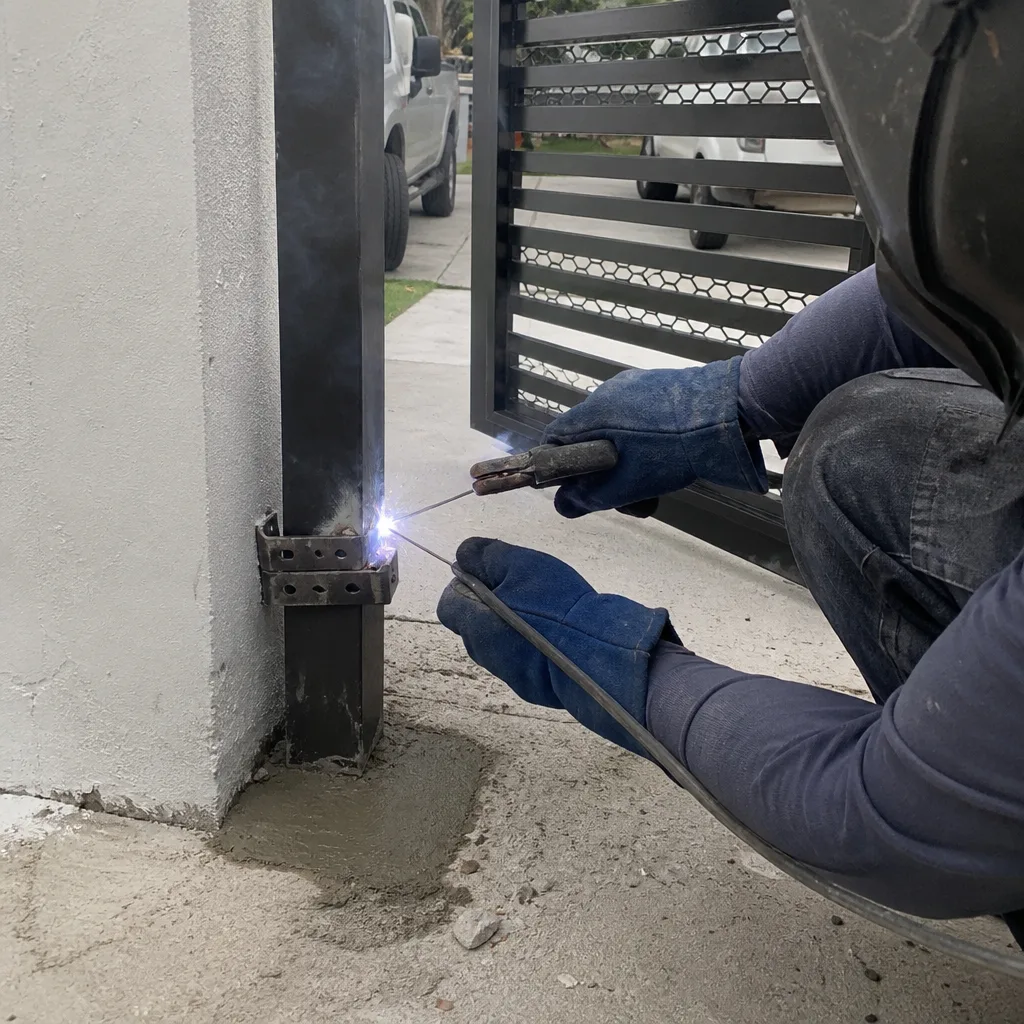
Not every homeowner wants to call a technician for every issue. If you do perform DIY maintenance, document it thoroughly. Poor documentation creates gaps that complicate future service and weaken your position in any liability dispute. Good documentation integrates with professional records and preserves value.
The Documentation Standard
- Photograph before, during, and after. Take wide shots showing the full gate and operator, then close-ups of specific components. Include date stamps. If you’re lubricating hinges, photograph the rust condition before and the applied grease after.
- Write a brief description. One paragraph: what you observed, what you did, what parts you used (with part numbers if possible), and any changes in gate behavior. Date and sign it.
- Record measurements. If you check chain sag, note the measurement. If you test manual release operation, note how many turns of the key were required and whether the gate moved freely.
- Preserve packaging and receipts. If you replace a hinge or roller, keep the part packaging. It proves the specification of what was installed.
- Store digitally with backup. Email the photos and description to yourself, or save to cloud storage. Paper records in Miami Beach garages deteriorate quickly in the humidity.
When you later call a professional, share this documentation. At Vance Gate Repair Miami Beach, we review homeowner records during our initial assessment. A clear maintenance history lets us diagnose faster and avoids redundant work. Under The Haven Standard, we add your documentation to our job file so the complete history, professional and DIY, exists in one place.
This matters for resale, too. Miami Beach real estate transactions increasingly include gate operator inspections, especially for waterfront properties with automated entry. A documented maintenance history, even partially DIY, demonstrates due diligence. A verbal-only history demonstrates nothing.
Miami-Dade Liability: When Repair History Becomes Evidence
Florida premises liability law holds property owners responsible for injuries caused by dangerous conditions they knew or should have known about. Automated gates are specifically identified in Florida case law as “dangerous instrumentalities” when they malfunction. This elevates the standard of care above ordinary maintenance.
In Miami-Dade County, where property values and litigation exposure are both high, this has practical consequences. If an automated gate injures a visitor, the plaintiff’s attorney will request:
- All maintenance and repair records for the gate operator
- Qualifications of anyone who performed work
- Whether the operator was modified from factory specification
- Whether safety devices were functional and properly calibrated
A homeowner who performed their own electrical adjustments without documentation faces a difficult position. They must prove their work was competent without records to support it. The absence of documentation shifts presumption against them.
We’ve consulted on cases where this became decisive. A property on Indian Creek had a gate that struck a pedestrian. The homeowner had adjusted the force settings himself two years prior, had no record of the original or adjusted values, and couldn’t demonstrate the gate met UL 325 at any point. The settlement reflected this uncertainty. A neighboring property with similar facts but professional maintenance records and force-test documentation reached a different outcome.
This isn’t about predicting lawsuits. It’s about controlling what you can control. Professional service with documented records doesn’t prevent accidents, but it prevents your maintenance history from becoming a liability accelerant if an accident occurs.
The Haven Standard exists partly because of this reality. Clause 4 (Evidence on every job) requires photographic documentation of every adjustment, every setting, every part installed. We leave a copy with the homeowner and file the original. If questions arise later, the record exists.
DIY vs. Professional: Real Cost Comparison in Miami Beach
Cost is where many homeowners make their decision. Here’s what the numbers actually look like in the Miami Beach market, based on our service records and typical parts pricing. For detailed pricing information, see our Gate Repair Cost Breakdown: The Miami Beach Homeowner’s Reference for 2026.
DIY Maintenance Costs (Annual)
| Task | Materials | Estimated Cost |
|---|---|---|
| Hinge lubrication (lithium grease) | 2 tubes | $18-$28 |
| Track cleaning supplies | Brush, solvent | $25-$40 |
| Photo-eye lens cleaning | Microfiber cloths | $10-$15 |
| Replacement hinge (if needed) | Heavy-duty ball bearing | $35-$85 |
| Replacement roller (sliding gate) | Steel or nylon | $25-$65 each |
| Annual DIY total | $113-$233 |
Professional Service Costs (Miami Beach Market)
| Service | Typical Range | What’s Included |
|---|---|---|
| Diagnostic service call | $125-$195 | Full system inspection, force testing, safety-device verification, written findings |
| Hinge replacement (per hinge) | $85-$165 | Part, labor, lubrication, adjustment, photo documentation |
| Chain tension and limit adjustment | $145-$225 | Measurement, adjustment, force verification, calibration record |
| Photo-eye realignment or replacement | $95-$185 | Alignment, wiring check, environmental testing, documentation |
| Operator control board repair | $285-$595 | Diagnosis, component-level repair or replacement, reprogramming, force testing |
| Full operator replacement | $1,450-$3,200 | Operator, installation, safety devices, programming, force certification, photo record |
The cost comparison isn’t simply DIY vs. professional for identical tasks. It’s about what each approach prevents or creates. A $195 diagnostic call that identifies a failing control board before it damages the motor saves the $1,200 motor replacement. A DIY chain adjustment that over-tensions and strips the gearbox creates a $680 repair that didn’t need to exist.
In Miami Beach specifically, labor rates for qualified gate technicians run higher than national averages due to cost of living and the specialized skill set required for coastal corrosion conditions. But the same market conditions make professional diagnosis more valuable: salt damage is often subtle, and catching it early prevents cascade failures.
At Gate Installation in Miami Beach, we offer free second opinions on any written estimate from another company. Bring the paperwork and we’ll review it at no cost. This is part of Haven Standard Clause 1: the price should be visible and agreed before work starts, not hidden behind a “call for quote” requirement.
Common Mistakes to Avoid
- Using WD-40 on gate hinges. It evaporates within weeks and leaves a residue that attracts sand and salt. In Miami Beach, this accelerates corrosion rather than preventing it. Use lithium-based grease or a marine-grade lubricant instead.
- Adjusting limits without disconnecting the gate. Setting travel limits under load gives false readings. The operator senses resistance from the gate mass and sets limits short of actual mechanical stops, causing incomplete operation and repeated overwork.
- Ignoring the manual release. Many homeowners haven’t tested their manual release in years. When Hurricane Ian’s outer bands knocked out power in parts of Miami Beach, gates that couldn’t be released manually trapped vehicles inside properties. Test quarterly.
- Cleaning photo-eyes with glass cleaner. Ammonia-based cleaners cloud the plastic lenses over time. Use water or isopropyl alcohol on a soft cloth. Check that both units’ indicator LEDs show alignment after cleaning.
- Assuming all brands adjust the same way. A LiftMaster limit procedure won’t work on a FAAC or BFT operator. Using generic instructions risks entering factory diagnostic modes that erase programming or change default safety settings.
- Delaying professional service for intermittent problems. A gate that “usually works” has a failing component that will fail completely, often at the worst moment. Intermittent photo-eye faults in Miami Beach often indicate moisture intrusion that will short the receiver board.
- Not getting a written price before work starts. This applies to professional service, but it’s worth stating explicitly. Verbal estimates create disputes. The written price, with scope specified, is your protection against scope creep and invoice shock.
When to Call a Professional
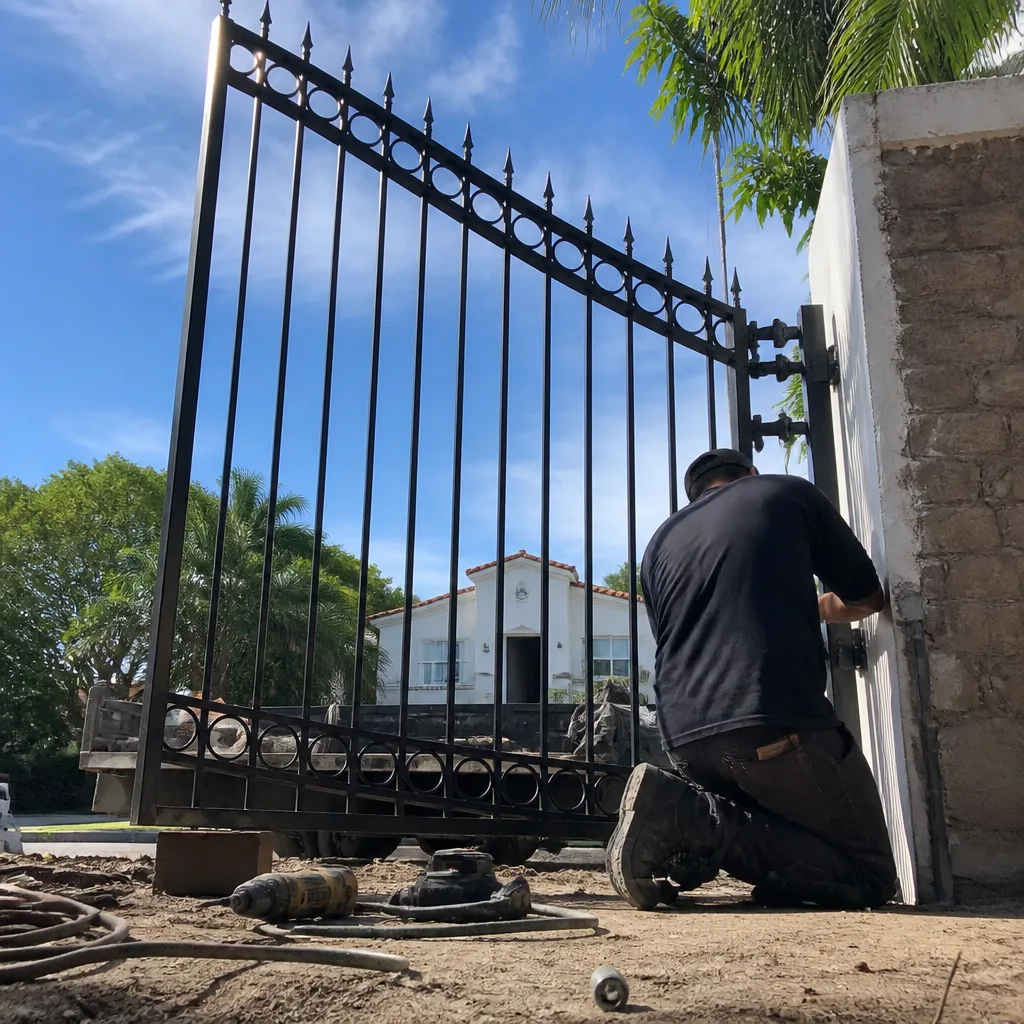
Call a licensed gate technician when the problem involves any electrical component, when safety devices need calibration or replacement, when the gate has caused injury or property damage, or when you’ve performed DIY maintenance and the problem persists. Also call before attempting any repair if your gate is under warranty; unauthorized work often voids manufacturer coverage.
In Miami Beach, where many properties have gates installed by previous owners with unknown maintenance history, a professional inspection establishes baseline condition and creates the documentation record that should have existed from installation forward.
Vance Gate Repair Miami Beach offers free estimates in Miami Beach. A technician arrives with diagnostic equipment for all nine brands we service, performs a full system inspection, and delivers a written scope and price before any work begins. Call (786) 371-2767 to schedule. Our live person answers 24 hours a day, seven days a week; no voicemail loop, no callback queue.
Frequently Asked Questions
Florida law allows homeowners to perform electrical work on their own single-family residence, but Miami-Dade County requires permits for low-voltage gate operator modifications that alter safety-device configuration. More importantly, unlicensed electrical work on automated gates voids UL 325 certification and may affect insurance coverage regardless of legality. For the protection of your coverage and certification, use a licensed gate technician for any electrical work.
Diagnostic service calls typically run $125-$195. Common repairs like hinge replacement range $85-$165 per hinge, chain and limit adjustments $145-$225, and operator control board work $285-$595. Full operator replacement with installation runs $1,450-$3,200 depending on brand, gate size, and safety-device requirements. Call (786) 371-2767 for a written estimate on your specific gate; estimates are free and include full diagnostic findings.
Mechanical maintenance like lubrication and cleaning won’t void warranty coverage. However, opening the operator housing, adjusting internal settings, or performing electrical repairs without manufacturer authorization typically does void warranty. Check your operator manual for specific restrictions; most brands require service by an authorized dealer to maintain warranty protection.
We recommend professional inspection annually for residential gates in Miami Beach, and every six months for properties within two blocks of the ocean or with high daily cycle counts. The salt air accelerates corrosion on mechanical parts and degrades electrical connections faster than inland climates. Annual service includes force testing, safety-device verification, and corrosion assessment that DIY maintenance doesn’t cover.
You should receive a written invoice specifying scope, parts installed with part numbers, labor description, and final price. Under The Haven Standard, Vance Gate Repair Miami Beach also provides photographic documentation of work performed, control board settings, and force-test readings. This creates an integrated maintenance record that preserves UL compliance and supports insurance claims if needed.
Yes. Repeated impact against the stop post stresses the gate frame, operator mount, and gearbox. It also indicates limit switch misalignment that may worsen unpredictably. What starts as slight contact becomes cracked welds or stripped gears. The repair cost increases by a factor of five to ten if you wait for complete failure. A limit adjustment takes under an hour when caught early.
The Bottom Line
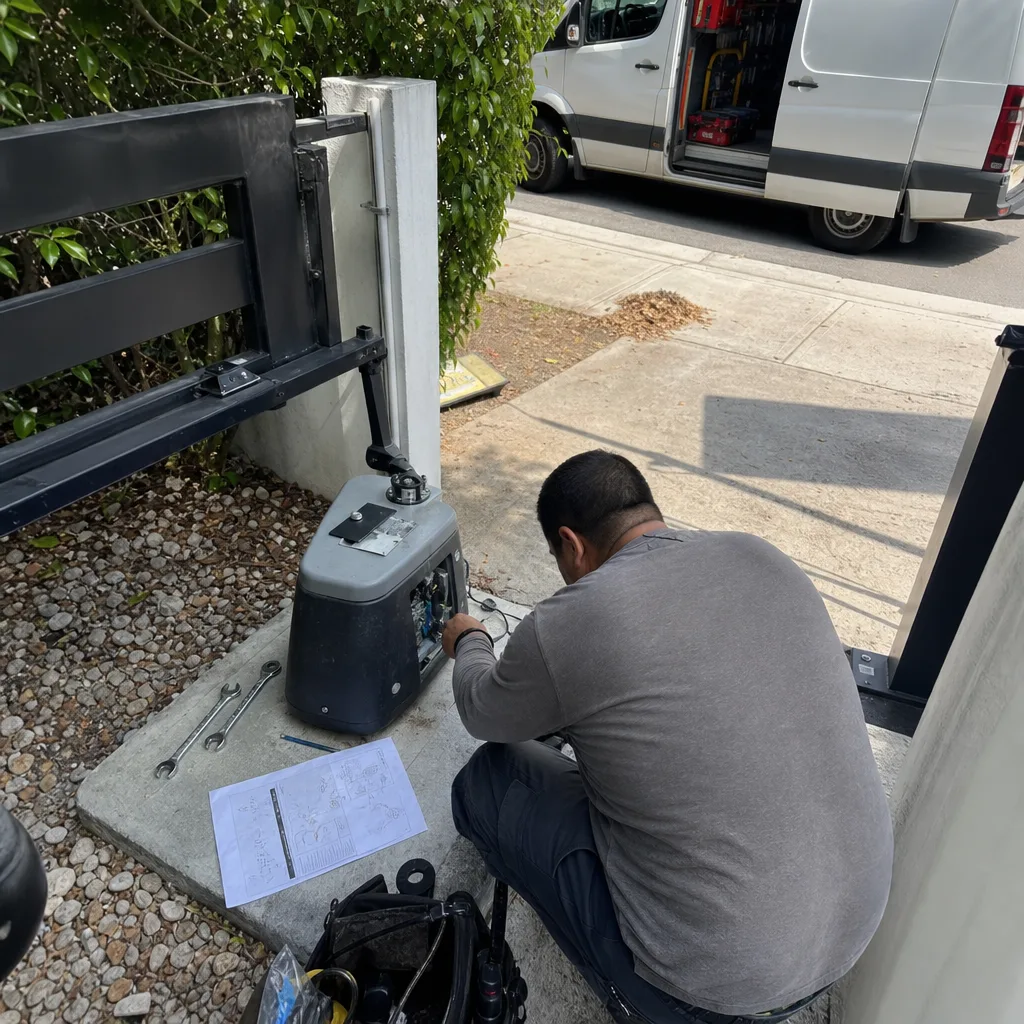
The DIY vs. professional question for gate repair isn’t about your skill with tools. It’s about whether the repair crosses the line from mechanical maintenance into electrical system work. That line defines UL 325 compliance, insurance coverage, and liability exposure in Miami Beach. Homeowners can safely handle lubrication, cleaning, visual inspection, and manual release testing. Anything involving operator settings, safety devices, or low-voltage wiring requires professional service with documented records.
The cost of professional diagnosis is modest compared to the cost of secondary damage, insurance disputes, or liability exposure from uncertified modifications. In a market like Miami Beach, where property values and litigation standards are both elevated, documentation isn’t bureaucracy. It’s protection.
Call Vance Gate Repair Miami Beach at (786) 371-2767 for a free estimate. A live person answers 24/7. We’ll inspect your gate, diagnose the issue, and deliver a written price before any work starts. Every visit includes photographic documentation under The Haven Standard, and all work is covered by our 365-Day Done Right Promise.
Written by Adrian Vance, Owner at Vance Gate Repair Miami Beach, serving Miami Beach since 2014.